
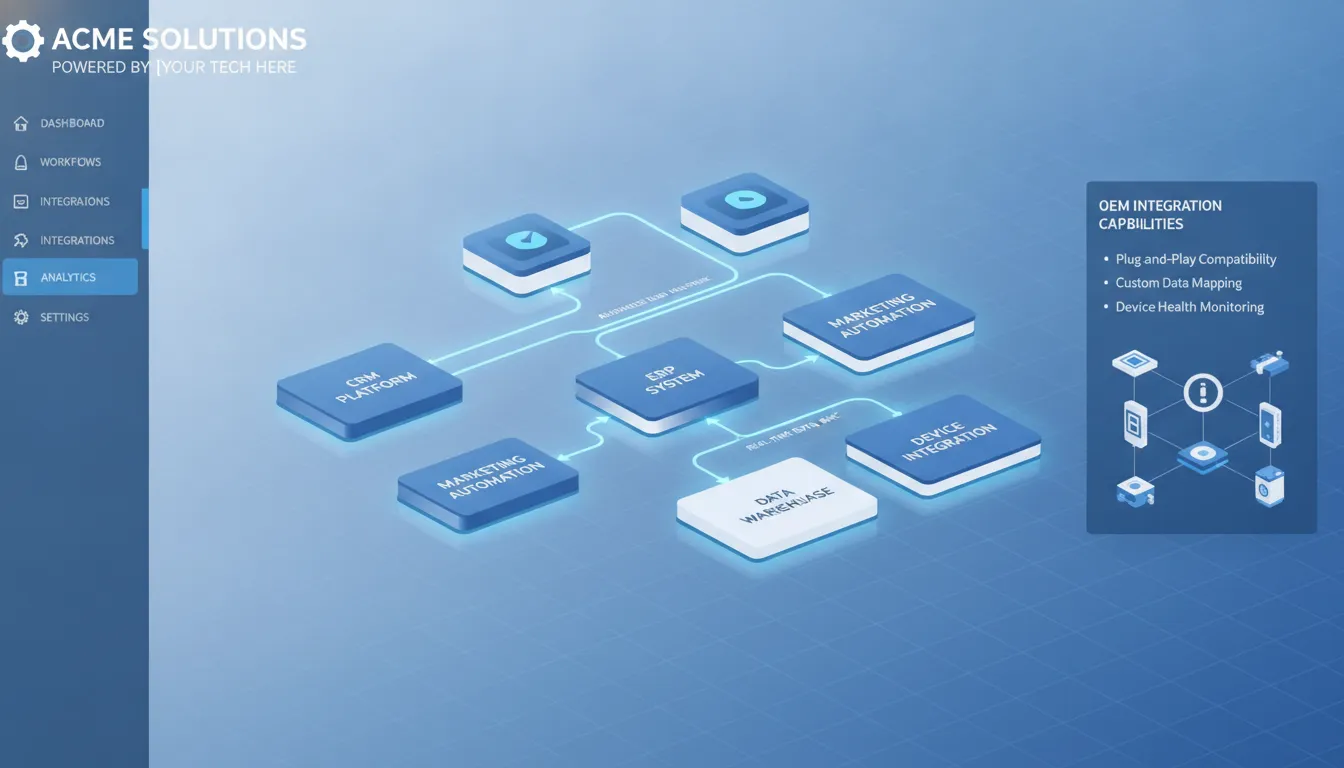
Building a custom workflow engine from scratch costs ten times more than embedding a proven solution. That heavy investment stalls product roadmaps and delays critical feature releases. Smart software vendors use ready-made tools to keep their platforms competitive and their engineering teams focused on core differentiation.
Ready to accelerate your product roadmap? Get a demo of FlowWright's white label BPM software today.
White label BPM software is a ready-made workflow engine that software vendors rebrand and embed into their own products. It delivers enterprise-grade process automation without the multiyear cost and risk of building a workflow system from scratch. The engine operates invisibly under the vendor's brand while providing the process logic, forms, and rules their end customers need.
Every software vendor faces a critical platform decision: build a custom workflow engine or partner with an expert provider. The choice shapes your roadmap, your cost structure, and your competitive position for years. Let us examine what white label BPM software is and why it has become the standard for leading B2B SaaS platforms.
What Is White Label BPM Software?
White label BPM software is a business strategy where one company builds a process management platform and another company rebrands and resells it as its own product. For software vendors, this means taking a fully developed workflow engine, applying their own branding, and delivering it to their customers as a native platform capability. The end user never knows a third-party engine powers their workflows.
This model lets software companies deliver enterprise-grade automation without diverting engineering resources from their core product. Vendors get a mature, tested workflow system on day one.
How Branding and Customization Work
True white label capability goes far beyond adding a logo. Vendors can customize every surface the end user sees: colors, typography, navigation layout, form styling, and even the URL structure. The workflow engine becomes indistinguishable from the host application. This deep integration builds trust and prevents the disjointed experience that plagues bolted-on third-party tools.
White Label Versus Standard BPM
Standard BPM tools are standalone applications. Users log into a separate system with its own interface, its own branding, and its own login flow. White label BPM software is designed to disappear inside the host platform. It is an invisible engine that powers automation for the vendor's customers without announcing itself.
Enterprise-grade white label platforms also adhere to strict compliance standards. The National Institute of Standards and Technology (NIST) provides clear guidelines for software supply chain security, and mature partners follow these frameworks to protect both the vendor and their end users.
Why Vendors Embed Instead of Build
The pressure to ship new features is relentless. A custom workflow engine requires specialized expertise in state management, process orchestration, error handling, and multi-tenancy. Building that from scratch consumes 18 to 36 months of engineering time. Embedding a white label workflow engine from a proven provider collapses that timeline to weeks while eliminating the ongoing maintenance burden.
Why Do Software Vendors Need White Label BPM Software?
Software vendors need white label BPM software because building workflow automation in-house takes too long, costs too much, and diverts engineering talent from the core product. White label embedding delivers faster time to market, lower total cost of ownership, and new revenue streams through premium automation features.
Software vendors operate in a market where feature velocity determines survival. Every engineering dollar spent on undifferentiated infrastructure is a dollar not spent on the unique capabilities that win deals. White label BPM software solves this equation across three dimensions.
Faster Time to Market
A custom workflow build takes 18 to 24 months for a production-ready engine. A white label platform integrates in 4 to 8 weeks. That velocity advantage compounds: vendors who embed early capture market share while competitors are still in development. Shipping automation features this year instead of next year changes the trajectory of the business.
The efficiency gain also protects the core product roadmap. Engineering teams stay focused on the platform differentiators that drive customer acquisition and retention rather than building and debugging a workflow state machine. This focus is the difference between leading a category and chasing incumbents.
- Custom build: 18-36 months, 5-8 engineers, ongoing maintenance
- Standard BPM license: 3-6 months, limited branding, user friction
- White label BPM: 4-8 weeks, zero infrastructure team, full brand control
Lower Total Cost of Ownership
The upfront cost of building a workflow engine is only the beginning. Maintenance, security patches, compliance updates, and scalability rewrites consume budget indefinitely. White label BPM software eliminates that tax. The partner handles updates to meet evolving workflow automation standards, and the vendor benefits from a system hardened by thousands of production deployments.
Vendors who switch from a custom build to white label embedding report cutting their workflow-related development costs by as much as 90%. That capital flows directly back into the core product, sales, and customer success.
New Revenue Streams
Workflow automation commands premium pricing. Vendors who embed white label BPM can offer process automation as an upsell tier, a per-seat add-on, or an enterprise package differentiator. This creates a direct revenue line from the embedded engine while simultaneously making the core platform stickier and harder to replace.
Customers who adopt workflow features inside their existing platform deepen their reliance on the vendor. Switching costs rise, retention improves, and expansion revenue grows without requiring new customer acquisition.
What Key Features Define Enterprise White Label BPM Software?
Enterprise white label BPM software must offer deep UI customization, multi-tenant architecture, API-first design, a rich integration hub, enterprise-grade security certifications, and flexible deployment options. These features determine whether the engine integrates seamlessly or creates operational friction.
Not all white label platforms are created equal. The features below separate a production-ready enterprise engine from a lightweight tool that will create technical debt.
Deep UI Customization and Multi-Tenancy
The platform must allow complete visual rebranding: logos, color palettes, fonts, button styles, and layout structure. True white label capability means the end user never detects a third-party presence. Multi-tenancy is equally critical. A single instance of the software must serve multiple customer accounts, each with isolated data, separate configuration, and independent rules. This architecture keeps operational costs low while supporting enterprise-scale deployments.
API-First Architecture and Integration Hub
Every engine function should be accessible through well-documented REST APIs. An API-first design lets vendor engineering teams integrate the engine deeply into their existing stack without workarounds. The platform should also ship with a library of prebuilt connectors for common enterprise systems: CRMs, ERPs, document management platforms, and cloud storage services.
FlowWright's white label BPM software for OEMs and SaaS platforms includes over 300 ready-to-use workflow steps. This breadth of integrations means vendors handle the long tail of customer requirements without writing custom code for every edge case.
- REST and GraphQL APIs for every engine function
- Prebuilt connectors for Salesforce, HubSpot, Dynamics 365, and more
- Webhook support for real-time event-driven workflows
- Custom step SDK for vendor-specific integration needs
Security Certifications and Deployment Flexibility
Enterprise buyers require SOC 2 Type II certification as a baseline. Healthcare and financial services customers add HIPAA compliance to the requirement list. A mature white label partner holds these certifications and undergoes regular third-party audits. Beyond compliance, the platform must offer encryption at rest and in transit, role-based access control, and audit logging.
Deployment flexibility matters equally. Some vendors need cloud-hosted SaaS for speed. Others require on-premises deployment for regulated industries. Containerized deployment via Docker and Kubernetes supports hybrid architectures. The right partner offers all three models. Workflow automation for SaaS platforms must adapt to the vendor's infrastructure, not the other way around.
White Label BPM vs. Building Your Own Workflow Engine
Building a custom workflow engine provides total control but carries enormous time and cost. Standard BPM licenses deliver limited embedding and no brand ownership. White label BPM combines the brand control of a custom build with the speed and low cost of a prebuilt solution. For most software vendors, it is the clear optimal choice.
Software vendors evaluating their options typically consider three paths. Each has trade-offs that affect engineering velocity, customer experience, and long-term maintenance burden.
The Hidden Cost of Building In-House
The obvious costs of a custom workflow engine are the engineering hours and calendar time. The hidden costs are more damaging: the opportunity cost of features not shipped, the recruiting burden of hiring workflow specialists in a tight labor market, and the ongoing compliance work required to maintain SOC 2 and HIPAA certifications for an in-house system.
A supply chain risk management perspective from NIST underscores that every component you build yourself is a component you must secure, audit, and maintain. For most vendors, workflow infrastructure is not a strategic differentiator. It is table-stakes functionality that should be sourced from a specialist.
Why Standard BPM Licenses Fall Short
Off-the-shelf BPM licenses solve the build-versus-buy question but introduce their own problems. Users face a second login, a different interface, and the vendor's branding. This friction erodes the seamless experience customers expect from modern SaaS platforms. Standard BPM tools also rarely support the multi-tenancy models that B2B vendors need, forcing workarounds that increase complexity.
Comparing the Three Approaches
| Approach | Upfront Cost | Time to Market | Maintenance Burden | Brand Ownership | Scalability |
|---|---|---|---|---|---|
| Build In-House | Very High | 18-36 months | Continuous | Full | Requires rewrites |
| Standard BPM License | Moderate | 3-6 months | Low | None | License-limited |
| White Label BPM | Low | 4-8 weeks | None | Full | Enterprise-grade |
Why White Label Wins
White label BPM software delivers the best outcome across every dimension that matters to a software vendor. You get full brand ownership, rapid deployment, zero ongoing maintenance, and enterprise scalability. Vendors using this model consistently report 80-90% reductions in workflow-related development costs and timelines. As one industry analysis from PMG notes, embedding a white label engine lets teams focus on their core product while the BPM provider handles the complexity of process orchestration.
How to Select the Right White Label BPM Partner
Choosing the right white label BPM partner requires evaluating engine maturity, API quality, security certifications, deployment flexibility, and support model. A proof-of-concept trial is the best way to validate that the platform meets your integration and performance requirements before committing.
The wrong partnership creates technical debt that takes years to unwind. Use these criteria to evaluate candidates and select a partner that will serve your platform for the long term.
Engine Maturity and Track Record
A white label workflow engine is infrastructure. You need a platform with years of production deployment across diverse industries and use cases. Look for case studies, customer references, and uptime SLAs that demonstrate reliability at scale. Request a proof-of-concept trial with your own data to evaluate performance under real conditions. A partner that hesitates to offer a trial is a partner that does not trust its own product.
Integration Depth and API Quality
Review the API documentation before the sales call. Good APIs are RESTful, versioned, well-documented, and include SDKs for the languages your team uses. The integration hub should offer prebuilt connectors for the enterprise systems your customers rely on. Test the developer experience: can your engineers build a working integration in a day or does it take weeks? The answer reveals the quality of the engineering investment behind the platform.
Security certifications are non-negotiable. The partner should hold SOC 2 Type II and offer HIPAA compliance for healthcare use cases. Strong encryption, access controls, and audit trails protect your platform and your customers' data. Enterprise white label BPM solutions that carry these certifications have already passed the scrutiny that your compliance team would apply.
Deployment Options and Support Model
Your partner must support the deployment models your customers require. Cloud-hosted, on-premises, and containerized options should all be available. The support model matters equally: you need access to engineers who understand embedded BPM architecture, not a tier-1 help desk. Look for a partner whose product roadmap aligns with your platform direction. A partner that is investing in low-code capabilities, AI-driven process optimization, and expanded integration coverage will grow with you.
Frequently Asked Questions
What is white label BPM software?
White label BPM software is a ready-made business process management platform that software vendors can rebrand and embed into their own products as a native feature. It allows vendors to deliver enterprise-grade workflow automation without building a custom engine from scratch.
Why should software vendors use white label BPM software?
Software vendors use white label BPM software to accelerate their product roadmaps by 12-18 months, reduce engineering costs by up to 90%, and create new revenue streams through premium automation features. It lets development teams focus on core product differentiation instead of workflow infrastructure.
Is white label BPM software secure for enterprise platforms?
Yes, enterprise white label BPM platforms carry SOC 2 Type II and HIPAA certifications, provide encryption at rest and in transit, and undergo regular third-party security audits. These certifications meet the compliance requirements of global enterprises and regulated industries including healthcare, finance, and government.
How does embedding a white label workflow engine reduce costs?
Embedding a white label engine eliminates the 18-36 month custom build cycle and removes ongoing maintenance, security patching, and compliance overhead. Vendors typically reduce workflow-related development costs by 80-90% compared to building and maintaining an in-house engine.
Can white label BPM software be customized to match my brand?
Yes, true white label platforms allow complete visual customization including logos, colors, fonts, navigation layout, and form styling. The engine becomes visually indistinguishable from your host application, so end users never know they are using a third-party workflow platform.
Ready to embed white label BPM software in your product?
Building a custom workflow engine from scratch consumes 18 to 36 months of engineering time that your team should spend on core product differentiation. Every month you delay is a month your competitors gain. A proven white label platform lets you ship enterprise automation features in weeks while keeping your team focused on what makes your platform unique.
Schedule your demo of FlowWright's white label BPM software now. See how leading SaaS platforms and OEMs embed enterprise workflow automation under their own brand.