Your team is great at what they do, but how much of their day is spent on administrative work instead of revenue-generating activities? The constant back-and-forth of scheduling, the manual process of creating invoices, and the time spent tracking down payments all add up. This is the operational drag that keeps good businesses from becoming great. The right service business software is designed to eliminate this friction. By automating your daily operations, you free up your team to focus on delivering excellent service. This efficiency has a ripple effect, leading to faster payments, more productive technicians, and happier customers who are more likely to stick with you for the long haul.
Key Takeaways
- Focus on software that solves your biggest operational headaches: Identify your main challenges, whether it's messy scheduling, slow invoicing, or disorganized customer data, and choose a platform with the specific tools to fix them.
- Look beyond the monthly subscription to understand the true value: Consider the complete investment, including implementation and training, and weigh it against the return you'll get from improved efficiency and faster payments.
- Choose a scalable partner, not just a temporary fix: Your business will evolve, so select a flexible platform that can grow with you and integrate seamlessly with other tools, saving you from a costly switch later on.
What is Service Business Software and Why Does It Matter?
If you’re running a service business, you know that success depends on juggling a lot of moving parts. From scheduling appointments and dispatching technicians to managing customer information and sending invoices, keeping everything organized can feel like a full-time job in itself. This is where service business software comes in. Think of it as a central command center for your entire operation. It’s a platform designed to streamline your core processes, automating the tedious administrative tasks that take up so much of your time.
Instead of relying on a messy combination of spreadsheets, sticky notes, and overflowing email inboxes, this software brings all your critical functions into one place. It helps you manage jobs, communicate with your team, and keep your customers happy. More than just a digital filing cabinet, modern service software often includes powerful workflow automation capabilities. This means it can connect different parts of your business, ensuring information flows smoothly from one step to the next without manual intervention. Adopting this kind of tool isn't just about getting organized; it's about building a more efficient, scalable, and profitable business.
Key Benefits for Growing Your Business
When you automate your daily operations, you free up your team to focus on what they do best: delivering excellent service. One of the most immediate benefits is a significant reduction in administrative work, which directly translates to more time for revenue-generating activities. This efficiency gain has a ripple effect across the business. With automated invoicing and payment reminders, you can improve your cash flow by getting paid faster. Your team becomes more productive because they have the information they need right at their fingertips, allowing them to complete more jobs. This also leads to happier customers, who appreciate the smooth communication and reliable service, making them more likely to stick with you for the long haul.
How Software Can Transform Your Daily Operations
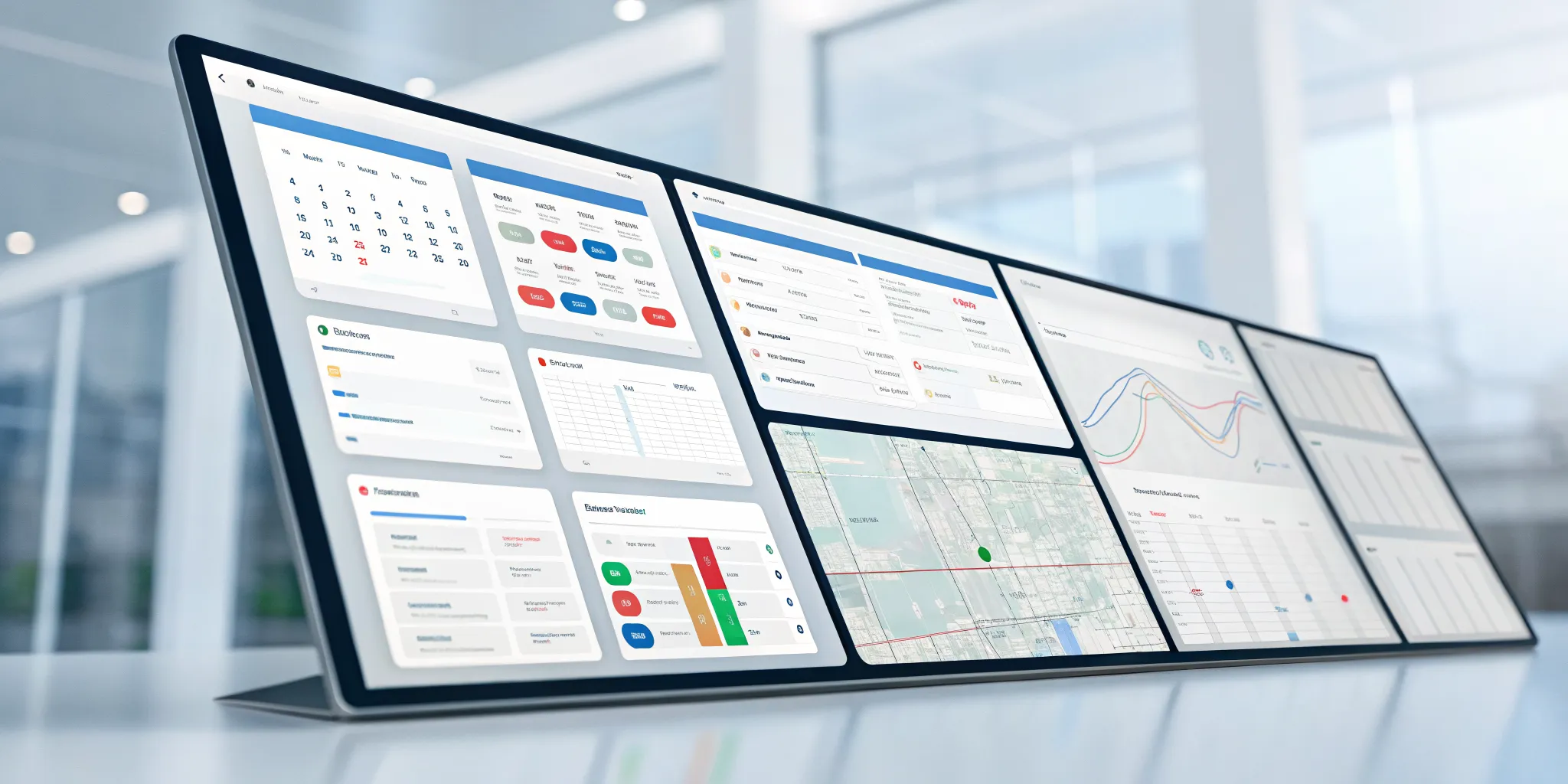
Imagine a day where scheduling is no longer a complex puzzle. Service business software gives you a clear view of your team's availability, making it simple to assign the right person to the right job. Technicians in the field can receive updates, access customer history, and process payments directly from a mobile device. Back in the office, your team can track job progress in real-time and handle customer inquiries without digging through paperwork. By creating a single source of truth, these platforms eliminate confusion and reduce errors. They also help you integrate different systems, ensuring that your customer relationship management (CRM), accounting, and operational tools all work together seamlessly. This creates a smoother workflow for everyone and a better experience for your customers.
Key Features to Look For in Service Business Software
When you start looking at different software options, you’ll quickly realize they aren’t all built the same. The right platform does more than just digitize your old paper-based methods; it fundamentally changes how you operate for the better. Think of it as the central nervous system for your business, connecting your team in the field with your staff in the office and, most importantly, with your customers.
The best service business software automates the tedious, manual tasks that eat up your day, freeing you and your team to focus on high-value work. It provides a clear, real-time view of your entire operation, from the moment a customer calls to the second their payment is processed. As you evaluate your options, look for a solution with a strong foundation in workflow automation that can grow with you. The following features are the non-negotiables that will have the biggest impact on your efficiency and profitability.
Scheduling and Dispatching
At its core, a service business is about getting the right technician to the right job at the right time. A great scheduling and dispatching tool makes this complex puzzle simple. Look for software with a visual, drag-and-drop calendar that allows your dispatchers to see everyone’s availability and location at a glance. This makes it easy to assign new jobs, respond to emergencies, and adjust schedules on the fly. The best systems also offer route optimization, which helps your technicians take the most efficient path between jobs, saving you a significant amount of money on fuel and time.
Customer Management (CRM)
Happy customers are the lifeblood of any service business. A built-in Customer Relationship Management (CRM) system acts as your single source of truth for every client interaction. It should store more than just names and addresses; it should track complete service histories, notes, upcoming appointments, and even photos of past work. This gives your team the context they need to provide personalized, informed service. With all this information in one place, you can automate appointment reminders and follow-up messages, which helps reduce no-shows and shows your customers you care about their experience.
Invoicing and Payments
Chasing down payments and dealing with messy paperwork can seriously hurt your cash flow. Modern service software streamlines the entire billing process. Your technicians should be able to generate a professional invoice on-site as soon as a job is complete and accept payment right then and there. This simple change means you get paid faster and eliminates the administrative headache of manual invoicing back at the office. Look for a system that makes it easy for customers to pay how they want, whether that’s by credit card, check, or online payment link.
Mobile Access and Live Tracking
Your field technicians are the face of your company, so they need the right tools to succeed. A powerful mobile app is essential. It puts all the information they need right in the palm of their hand, from job details and customer history to parts inventory. With a good mobile app, technicians can update job statuses in real time, create estimates on the spot, and capture customer signatures digitally. This keeps the office in the loop, reduces trips back and forth, and ensures everyone is working with the most up-to-date information.
Reporting and Analytics
You can't improve what you don't measure. The best software provides clear, easy-to-understand dashboards and reporting that transform your business data into actionable insights. You should be able to track key performance indicators (KPIs) like first-time fix rates, revenue per technician, and job profitability without having to dig through spreadsheets. These analytics help you spot trends, identify areas for improvement, and make strategic decisions based on hard data, not just a gut feeling. This is how you find opportunities to grow your business intelligently.
Key Integrations
Your service software doesn't operate in a bubble. It needs to connect seamlessly with the other tools you use to run your business, such as your accounting software, marketing platforms, and parts suppliers. A platform with strong integration capabilities, like an iPaaS solution, prevents you from having to do double data entry and ensures information flows smoothly across your entire organization. Before you commit to a platform, make sure it can connect with the critical systems you already rely on. This creates a unified tech stack that works together to make your business more efficient.
The Best Service Business Software to Consider
Finding the right software for your service business can feel like a huge task, but it’s all about matching the platform’s strengths to your specific needs. Whether you’re a large enterprise looking to automate complex internal processes or a small field service team needing to streamline daily jobs, there’s a solution designed for you. The platforms we’re about to cover are some of the top contenders in the industry, each offering a unique set of tools to help you manage operations, serve customers better, and grow your business.
Think of this list as your starting point. As you read through, consider your team’s size, the types of services you offer, and your biggest operational headaches. Are you struggling with scheduling and dispatching? Do you need a better way to handle invoicing and payments? Or are you looking for a powerful engine to automate workflows across your entire organization? Let’s explore some of the best options available to help you find the perfect fit.
FlowWright: Enterprise Workflow Automation Platform
FlowWright is built for service businesses that require more than just field management. It’s an enterprise-grade platform designed to automate complex business processes from end to end. If your operations involve multiple departments, intricate approval chains, or sophisticated data handling, this is where FlowWright shines. Its low-code, AI-powered environment allows you to design, build, and deploy custom workflows without extensive coding. This makes it a powerful choice for companies looking to achieve true digital transformation by connecting systems, streamlining communication, and gaining complete control over their operational processes.
ServiceTitan: Comprehensive Home Service Management
ServiceTitan is a powerful, all-in-one platform specifically designed for residential field service businesses. According to the company, its goal is to help you "run better," make more money, and reduce paperwork. It centralizes your operations to help you improve daily tasks, create happier customers, and increase profits. If you run a home service company, like plumbing, HVAC, or electrical, ServiceTitan provides a complete toolkit to manage everything from booking to billing. It’s a robust solution for teams focused on optimizing their field service management and delivering exceptional customer experiences.
Jobber: All-in-One Field Service Solution
Jobber is a fantastic option for small to medium-sized home and commercial service businesses. It’s particularly well-regarded for its strong scheduling features and automated customer follow-ups, which help ensure no client ever falls through the cracks. If you’re looking to improve team organization and client communication, Jobber offers an intuitive platform to manage jobs from the initial quote to the final invoice. Its user-friendly interface makes it easy for your team to get up and running quickly, making it one of the best field service management software choices for growing teams.
Workiz: User-Friendly Service Management
Workiz is a leading software solution for field service businesses that dispatch technicians for jobs like plumbing, electrical work, or appliance repair. The platform is designed to help you manage your entire operation in one place. According to Workiz, it helps businesses handle everything from scheduling and dispatching workers to creating invoices and getting paid. Its focus on a streamlined, user-friendly experience makes it a great choice for teams that need a straightforward tool to organize their daily workload, improve communication between the office and the field, and simplify their field service management process.
Housecall Pro: Mobile-First Service Platform
Housecall Pro is built with the on-the-go service professional in mind. Its mobile-first design empowers technicians to manage their entire workflow directly from their phones or tablets. This is ideal for businesses where field staff operate with a high degree of autonomy. From scheduling and dispatching to creating invoices and processing payments on-site, the platform’s mobile app keeps everything connected in real time. This approach helps reduce trips back to the office, minimizes paperwork, and allows your team to provide a seamless customer experience from start to finish.
Service Fusion: Multi-Trade Field Service Software
Service Fusion offers an all-in-one software solution tailored for small to mid-size service contractors across various trades. The platform is designed to help businesses streamline their operations by bringing job management, technician dispatching, and customer management into a single system. According to the company, it helps contractors run their businesses more smoothly and efficiently. If you’re managing a team of technicians and need a centralized hub to keep track of every job, Service Fusion provides the essential tools to improve organization and field service management without overwhelming your team.
How the Top Solutions Stack Up
Choosing the right software feels like a huge decision, because it is. While many platforms offer similar core functions, they often have different strengths tailored to specific types of businesses. The best way to find the right fit is to look closely at how their features, design, and ability to grow align with your unique operational needs and long-term goals. It’s less about finding the single best platform and more about finding the one that’s best for you.
A Side-by-Side Feature Comparison
When you start comparing platforms, you’ll notice they each have a sweet spot. For instance, ServiceTitan is built as an all-in-one tool that supports a wide variety of trade businesses, from plumbing and HVAC to roofing. Jobber is often a great fit for small to medium-sized service businesses, with strong features for scheduling and automated customer follow-ups. Meanwhile, Workiz is designed to help businesses manage everything in one place, from dispatching technicians to creating invoices and getting paid. To get a clear picture, you can use a comparison tool to see how specific features stack up against your list of must-haves.
User Experience and Design
A powerful platform is only effective if your team actually uses it. That’s why user experience and design are so important. A clean, intuitive interface can make daily tasks feel simple, encouraging quick adoption across your team. Some solutions, like Service Fusion, are designed as comprehensive systems to help make your entire operation run smoother, which often means the user experience is a top priority. Before committing, take advantage of free trials or demos to get a real feel for the software. See how easy it is to schedule a job, create an invoice, or pull a report. The right software should make your work easier, not add another layer of complexity.
Scalability and Integrations
Your business isn't static, and your software shouldn't be either. Think about your future growth and choose a platform that can scale with you. Some providers position themselves as long-term technology partners dedicated to helping your business succeed and expand. Equally important is how well the software integrates with the other tools you rely on. Many platforms connect with popular business tools like QuickBooks or Google Calendar, which is critical for creating a unified workflow and eliminating manual data entry. A solution that is both scalable and integrates seamlessly with your existing systems will support your business for years to come.
Breaking Down the Cost of Service Business Software
When you’re evaluating new software, it’s easy to focus on the monthly subscription fee. But the true cost of any platform goes far beyond that number. To make a smart investment, you need to look at the complete picture, which includes the subscription model, any potential hidden fees, and the ultimate return you can expect.
Thinking about the total cost of ownership from the start helps you avoid surprises down the road. It also shifts the conversation from "How much does this cost?" to "What value will this bring to my business?" A platform might seem more expensive upfront, but if it saves your team hundreds of hours and streamlines your operations, it could be the most cost-effective choice in the long run. Let’s walk through the key financial factors to consider so you can choose a solution that fits your budget and your growth goals.
Understanding Different Subscription Models
Service business software is typically sold on a subscription basis, but the models can vary quite a bit. Some platforms charge per user, per month, which can be straightforward for small teams but can get expensive as you grow. Others offer tiered plans, where you get more features as you move up to a higher level. You might also find usage-based models that charge based on the number of jobs you complete or the amount of data you process.
Many service businesses find themselves juggling too many different software tools, which makes it hard to stay organized and can lead to death by a thousand cuts with subscription fees. A unified platform that handles multiple functions can often provide more value and simplicity. When you’re comparing options, think about your team’s current size and your plans for the future. A model that works for you today should also be able to scale with you tomorrow.
Watch Out for Hidden Costs
The subscription fee is just the beginning. Hidden costs are one of the biggest reasons for buyer’s remorse, so it’s important to know what to look for. Implementation is a major one. Will you need to pay for setup and data migration? What about training your team? One of the biggest hurdles is getting everyone to adopt the new system, so factor in the time and resources needed to get your team comfortable.
Another common issue is a lack of integration with your other essential tools. If your new software doesn't connect smoothly with your accounting or marketing platforms, you could face expensive custom development work or time-consuming manual data entry. FlowWright's iPaaS solutions, for example, are designed to prevent this by connecting different systems seamlessly. Always ask vendors for a full breakdown of potential costs, including setup, training, support, and any necessary integrations.
Calculating Your Potential ROI
The most important financial question isn't about cost, but about value. A great software platform is an investment that should pay for itself through increased efficiency and revenue. To figure out your potential return on investment (ROI), start by identifying your biggest operational bottlenecks. Are you losing time on manual scheduling? Are invoices falling through the cracks?
Look for concrete results. For example, some platforms report that their customers see a 15% average increase in annual revenue. Think about what that would mean for your business. Could you fit in one more job per day? Could you reduce the time it takes to get paid by 10%? These improvements add up quickly. When talking to vendors, ask for case studies or data that shows the tangible results their customers have achieved. Exploring a platform's features overview can also help you connect its capabilities to your specific business goals.
Common Implementation Hurdles (and How to Clear Them)
Switching to new service business software is a major step forward, but it’s rarely as simple as flipping a switch. The process involves more than just technology; it requires changing the daily habits of your team and reshaping core business operations. While that sounds intimidating, most of the challenges you’ll face are predictable and, more importantly, solvable with a bit of planning. Think of them less as roadblocks and more as hurdles you can prepare to clear.
The most common issues fall into three main categories. First, there’s the human element: getting your team to embrace a new way of working. Second are the technical logistics, like moving all your existing data and connecting the new software to your other essential tools. Finally, you need to manage the transition itself to ensure it’s a smooth handoff that doesn’t disrupt your operations or frustrate your customers. By tackling each of these areas with a clear strategy, you can ensure your software implementation is a success from day one. A platform with a wide range of features can also simplify this process significantly.
Handling Team Adoption and Training
Even the most powerful software is useless if your team doesn’t use it. One of the biggest implementation challenges is helping people move past their old routines and embrace a new system. The key is to manage this change proactively. Start by communicating the “why” behind the switch, focusing on how the new software will make their jobs easier and help the company grow.
Effective training is also critical. Instead of a single, one-size-fits-all demo, provide role-specific sessions that show each person exactly how the software applies to their daily tasks. It also helps to identify a few enthusiastic “champions” within your team who can offer peer support and build momentum. Choosing a platform with an intuitive, low-code interface can dramatically shorten the learning curve and make your team feel more confident from the start.
Managing Data Migration and Integration
Moving your business to a new digital home base involves some technical heavy lifting, particularly when it comes to data migration and system integration. A common misstep is underestimating the work required to transfer customer histories, job records, and financial data cleanly. Before you begin, create a detailed migration plan that outlines what data needs to move, where it’s coming from, and how you’ll clean it up for the new system.
Similarly, your new software can’t operate in a silo. It needs to connect with your accounting, marketing, and other business tools. Prioritize which integrations are essential for launch day and which can wait. Look for a platform with robust iPaaS solutions or a flexible API, as this will make it much easier to create a connected and efficient tech stack that works for you.
Creating a Smooth Transition
How you manage the final switch-over can make or break your implementation experience. A bumpy transition can lead to lost productivity and unhappy customers, so your goal is to make it as seamless as possible. Instead of a "big bang" launch where everything changes overnight, consider a phased rollout. You could start with a single team or a specific business function to work out any kinks on a smaller scale.
To ensure customer satisfaction remains high, focus on perfecting your customer-facing processes first. Make sure scheduling, invoicing, and communications are running flawlessly in the new system. This is where powerful workflow automation becomes invaluable, as it helps you design and execute these critical processes without a hitch. A well-planned transition minimizes disruption and sets your team up for long-term success.
Are There Budget-Friendly Options for Smaller Teams?
Not every service business needs a full-scale enterprise platform right out of the gate. If you're just starting or running a smaller crew, the thought of a hefty software subscription can be daunting. The good news is that you don't have to break the bank to get organized and operate more professionally. The market is full of options designed specifically for teams that are watching their budgets closely. Many software providers offer entry-level plans that give you the core tools you need to manage jobs and communicate with customers without the complexity or cost of an advanced system.
These solutions can help you build a solid foundation for your operations, letting you focus on delivering great service and growing your business. Instead of juggling spreadsheets, paper invoices, and a chaotic calendar, you can centralize your key tasks in one place. This not only saves you time but also reduces the risk of missed appointments or lost customer information. As your needs evolve, you can always move to a more powerful platform. The key is to find a starting point that fits your current situation while keeping an eye on where you want to go in the future.
Free (But Limited) Plans
If your budget is close to zero, a free plan can be a fantastic way to get started. Several platforms offer a free tier that covers the absolute basics. For instance, you can find free field service management tools that handle simple scheduling and invoicing. Companies like Workiz and Kickserv provide free plans for one or two users, while Field Complete offers its core features for free for up to 10 users. These are no-frills options, but they are a huge step up from spreadsheets and sticky notes. They let you test out the benefits of service software without any financial commitment, helping you build good operational habits from day one.
Low-Cost Options for Startups
When you're ready to move beyond the limitations of a free plan, you'll find plenty of affordable, low-cost options. These starter plans are designed for small but growing teams that need more functionality. A platform like Service Fusion, for example, offers an all-in-one solution for a competitive monthly fee. For a modest investment, you can get access to more robust features like advanced customer management, detailed reporting, and support for more users. This tier is perfect for businesses that are gaining momentum and need a system that can keep up without requiring a significant financial leap. It’s a smart way to invest in efficiency as you scale.
Knowing When to Upgrade
The free or low-cost software that served you well initially will eventually show its limits as your business grows. You'll know it's time to upgrade when you find yourself juggling multiple disconnected tools to fill gaps in functionality or when your team spends more time fighting the software than using it. Relying on separate apps that don't talk to each other creates data silos and inefficiencies. The best approach is to choose a software that can handle your business as it gets bigger. Planning for this from the start saves you the headache of a complicated data migration down the road and ensures a smoother transition as your operational needs become more complex.
How to Choose the Right Service Software
Selecting the right service software is about more than just picking the platform with the longest feature list. It’s a decision that will shape your team’s daily workflows, impact customer satisfaction, and determine how easily your business can grow. To find the perfect fit, you need to look beyond the marketing claims and focus on three core areas: how well it aligns with your specific needs, how easy it is for your team to actually use, and whether it can support you in the long run. Getting this choice right means less friction for your team and a stronger foundation for your business.
Align Software with Your Business Needs
Before you even start looking at demos, take some time to map out exactly what you need the software to do. What are the biggest operational headaches you're trying to solve? Make a list of must-have features versus nice-to-haves. For example, do you absolutely need a graphical process designer, or is that a bonus? Consider the deployment model and how it fits with your current infrastructure. The goal is to find a solution that molds to your processes, not the other way around. A platform with a comprehensive set of features gives you the flexibility to address your unique challenges without paying for tools you’ll never use.
Check for Ease of Use and Quality Support
The most powerful software in the world won’t help you if your team finds it confusing or difficult to use. A clean, intuitive interface is essential for quick adoption and consistent use. During your evaluation, ask about the onboarding process and what training resources are available. Does the company offer solid documentation, tutorials, or direct support when you run into a problem? A strong support system shows that a company is invested in its customers' success. Look for a partner who is committed to helping you get the most out of your investment, as this will make the transition much smoother for everyone involved.
Plan for Long-Term Growth
The software that works for you today should also work for you in three to five years. Think about your business goals. Are you planning to expand your team, add new services, or handle a higher volume of work? Choose a platform that can scale with you. A scalable system saves you the significant cost and disruption of having to switch providers down the road. Look for flexible iPaaS solutions that allow for deep integrations and can handle more complex workflows as your business evolves. This foresight ensures your software remains an asset, not a liability, as you continue to grow.
Get the Most Out of Your New Service Software
Choosing the right service software is a huge step, but it’s only the first one. The real transformation happens when you successfully weave that software into the fabric of your daily operations. Simply having the tool isn’t enough; you have to use it effectively to see a real return on your investment. This means getting your team on board, knowing what success looks like, and making sure you’re using the platform to its full potential.
Many businesses stumble after the initial purchase because they overlook these critical steps. A powerful platform can feel overwhelming without a clear plan for adoption and measurement. To avoid letting your new software turn into expensive shelfware, you need a strategy. Focus on a smooth rollout with comprehensive training, define your key performance indicators from day one, and commit to exploring every feature that can make your business run more smoothly. By doing so, you turn a software purchase into a foundational part of your growth.
Follow Best Practices for Setup and Training
Getting your team to embrace a new system is often one of the biggest implementation challenges. People are used to their old ways, and change can feel disruptive. That’s why effective training is about more than just showing people where to click. It’s about demonstrating how the new software makes their specific jobs easier and helps the company achieve its goals. Start by creating a clear training plan tailored to different roles within your team. Identify a few tech-savvy employees who can act as internal champions, offering support to their colleagues. Ongoing training and accessible resources will ensure everyone feels confident and capable as they adapt to the new workflows.
How to Measure Performance and ROI
How do you know if your new software is actually working? You have to measure it. Before you even go live, identify the key performance indicators (KPIs) you want to improve. These could be operational metrics like average response time, first-time fix rate, or the time it takes to send an invoice. They could also be customer-focused, such as customer satisfaction scores or retention rates. By establishing a baseline, you can track your progress and clearly demonstrate the software’s return on investment. A platform with strong reporting and analytics makes this process simple, allowing you to visualize data and make informed decisions without guesswork.
Use Every Feature to Its Fullest
Many service businesses get stuck juggling too many different software tools, which often leads to more time spent on organization than on actual work. A comprehensive service platform is designed to be your single source of truth, but only if you use it that way. Take the time to learn about all the features your software offers, even those that don't seem immediately relevant. You might discover a workflow automation tool that can save your admin team hours each week or an integration that connects your field and office staff seamlessly. Make it a habit to review new platform features and think about how they can be applied to your evolving business needs.
Related Articles
- 7 Benefits of Workflow Automation for Small Businesses
- Workflow Management Software: A Head-to-Head Comparison
- The Ultimate BPM Tools List: 10 Options Compared
Frequently Asked Questions
My business is small. Do I really need service business software right now? It’s a common question, and the answer often comes down to your goals. If you're spending more time on administrative tasks like scheduling and invoicing than on serving customers, it's probably time. Even for a small team, using software instead of spreadsheets or paper creates a professional foundation. It helps you stay organized, reduces errors, and ensures a consistent customer experience, which is crucial for building a good reputation and preparing your business for future growth.
With so many features available, what should I prioritize when choosing a platform? Start by identifying your single biggest operational bottleneck. Is it chaotic scheduling, slow invoicing, or poor communication with your field team? The most important features are the ones that solve your most pressing problems. For most service businesses, strong scheduling and dispatching, a solid customer management (CRM) tool, and a streamlined invoicing system are the non-negotiables. Once you have those covered, you can look at other valuable features like mobile access and reporting.
What's the biggest mistake businesses make when switching to new software? The most common mistake is underestimating the human side of the change. Many businesses focus entirely on the technology and forget to prepare their team for a new way of working. A successful switch requires clear communication about why the change is happening and how it will benefit everyone. It also requires role-specific training, not just a generic demo. If your team doesn't understand or embrace the new tool, you'll never get the full value from your investment.
How can I justify the cost of this software to my team or leadership? Focus on the return on investment, not just the subscription fee. Frame it as an investment in efficiency and growth. Calculate the time your team currently spends on manual tasks and show how automation can free them up for more profitable work. You can also point to specific outcomes, like faster payments improving cash flow or better scheduling allowing technicians to complete more jobs each week. The right software doesn't just cost money; it helps you make more of it.
What's the difference between a standard field service app and a workflow automation platform like FlowWright? Think of it as the difference between a helpful tool and a central command center. A standard field service app is great for managing day-to-day jobs, like scheduling and dispatching. A workflow automation platform goes much deeper. It connects your entire business process, from a customer's initial request to final accounting, and can automate complex approval chains and data transfers between different departments and systems. It’s designed for businesses that need to streamline their entire operation, not just their field service tasks.