
Many businesses hesitate to explore automation because of a few persistent myths. You might have heard that it’s only for massive corporations, that it requires deep technical knowledge, or that it will make your workforce obsolete. The truth is, these ideas are outdated. Modern automation is more accessible, user-friendly, and strategic than ever before. Its real purpose is to complement your team by taking over the tedious work, freeing people to focus on creative problem-solving and customer relationships. Today’s robotic automation solutions are designed to be scalable and integrate smoothly with the systems you already use, making them a practical tool for any organization looking to improve efficiency without causing major disruption.
Key Takeaways
- Unify your automation strategy: True efficiency comes from connecting both physical robots and digital software bots. Use a central process engine to orchestrate their actions, turning isolated tasks into a single, seamless workflow across your business.
- Empower your team, don't replace it: Automation is about augmenting human capabilities, not making them obsolete. By automating repetitive work with accessible low-code tools, you free up your employees to focus on creative problem-solving and strategic work that drives real value.
- Choose a platform, not just a tool: To get the most from your investment, look beyond single-task robots. Select a flexible automation platform that offers seamless integration, powerful analytics, and a central process engine to manage complex workflows between people, bots, and your existing systems.
What is Robotic Automation?
When you hear the term “robotic automation,” you might picture a factory floor filled with mechanical arms. While that’s part of the story, the reality is much broader and more focused on the software that powers modern business. At its core, robotic automation uses technology to handle repetitive, rule-based tasks and workflows within an organization. Think of it as creating a digital workforce of software “bots” that can execute processes just like a person would, only faster and without fatigue.
The main goal is to increase efficiency. By automating routine activities like data entry, report generation, or invoice processing, you free up your team to focus on more strategic, creative, and customer-facing work. This isn't about replacing people; it's about augmenting their capabilities. A well-designed automation strategy helps your company run more smoothly, reduces errors, and allows you to get more done with the resources you have. The automation features available today are designed to integrate into your existing operations and drive real, measurable results.
How Robotic Automation Works
So, how do these software bots actually get the job done? Imagine a highly efficient assistant who can perfectly follow a set of instructions. Robotic Process Automation (RPA) works similarly. These software programs are configured to interact with your company’s applications and systems right through the user interface, just like an employee would. They can log into applications, move files, copy and paste data, fill in forms, and extract information from documents.
This process allows companies to streamline repetitive tasks without needing to build complex, custom integrations. As businesses face constant pressure to improve productivity and reduce operational costs, these tools offer a practical way to optimize performance by taking over the predictable, high-volume work that can slow teams down.
The Software Driving Automation
The software that drives automation is becoming more intelligent every day. Early automation was strictly rule-based, meaning it could only follow a precise, pre-programmed script. But with the integration of artificial intelligence (AI) and machine learning, automation technology is now capable of learning, adapting, and making decisions in real time. This evolution significantly expands what’s possible.
Instead of just processing structured data, modern automation can now handle more complex scenarios. For example, AI-powered tools can understand and process information from unstructured documents like emails and invoices, a process known as Intelligent Document Processing. This ability to learn and adapt makes automation more robust and flexible, allowing it to handle exceptions and variations without human intervention, which further amplifies its impact on your business.
Types of Robotic Automation
When you hear "robotic automation," it’s easy to picture a single type of machine, but the reality is much more diverse. Different robots are designed for different tasks, environments, and levels of human interaction. Understanding these types is the first step in identifying which solutions fit your specific operational needs. While these robots perform the physical work, it's the underlying process engine that connects their actions to your broader business goals. A robust automation platform is what allows you to orchestrate these robotic tasks as part of a seamless, end-to-end workflow. Let's look at the main categories of robots you'll encounter.
Industrial Robots
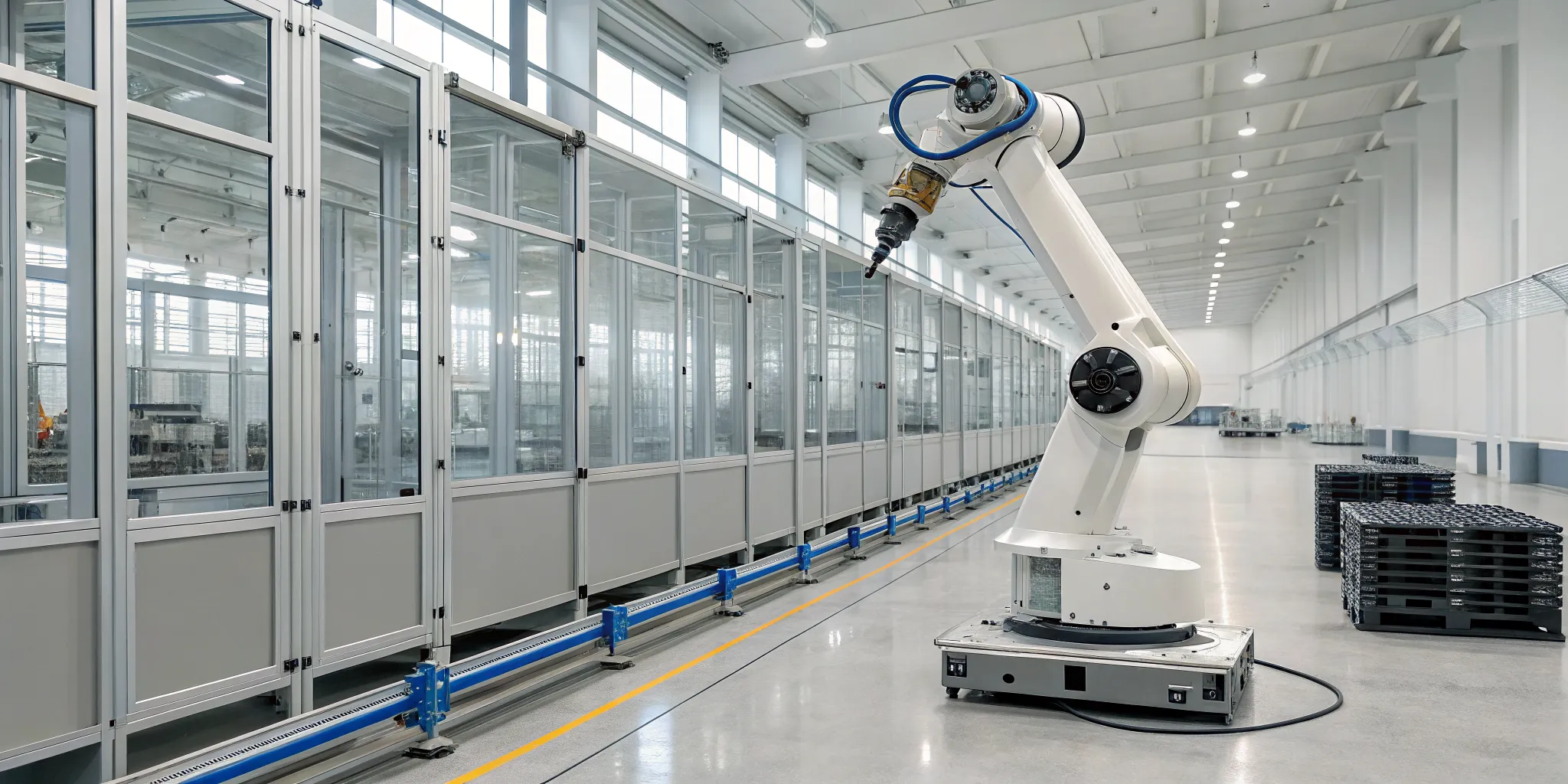
Think of industrial robots as the powerful workhorses of automation. These are often large, stationary machines designed for heavy-duty, repetitive tasks that require immense precision and speed. You’ll typically find them in manufacturing and assembly lines, performing jobs like welding, painting, and packing. Because they operate at high speeds and with great force, they are usually kept in controlled environments or safety cages, separate from human workers. These robotic systems are essential for high-volume production, enabling businesses to achieve consistent quality and output on a massive scale. They excel at tasks that are too strenuous, dangerous, or monotonous for people to perform reliably over long shifts.
Collaborative Robots (Cobots)
Collaborative robots, or cobots, are designed with a different philosophy in mind: partnership. Unlike traditional industrial robots that work in isolation, cobots are built to work alongside humans in a shared workspace. Equipped with advanced sensors, they can detect a human presence and slow down or stop to prevent accidents, making them safe to interact with directly. Cobots are great for tasks that require a human touch for some steps and automation for others. For example, a cobot could hold a heavy component in place while a person performs a delicate assembly task. They help your team by taking over repetitive or physically demanding parts of a job, freeing up employees for more complex, value-added work.
Mobile Robots
As their name suggests, mobile robots are all about movement. The most common type you'll see in business settings are Autonomous Mobile Robots (AMRs). Unlike automated guided vehicles (AGVs) that follow fixed paths, AMRs use sensors and AI to understand their environment and move around obstacles dynamically. This flexibility makes them incredibly useful in warehouses, distribution centers, and large facilities. Autonomous mobile robots are masters of logistics, handling tasks like picking up and transporting materials, managing inventory, and fulfilling orders. By automating the movement of goods, they help streamline supply chain operations and get products where they need to go faster and more efficiently.
Articulated and SCARA Robots
Diving a bit deeper into the world of industrial robots, you’ll find specialized types like articulated and SCARA robots. An articulated robot is what most people picture when they think of a robotic arm; it has multiple rotary joints that give it a wide range of motion, similar to a human arm. This flexibility makes it ideal for complex tasks like welding and machine tending. SCARA (Selective Compliance Articulated Robot Arm) robots are a bit different. They are designed for speed and precision in a horizontal plane, making them perfect for "pick-and-place" or assembly tasks where components are moved from one spot to another. Both types are chosen for their ability to perform specific, high-precision movements repeatedly.
Which Industries Benefit from Robotic Automation?
It’s easy to picture robots on a factory floor, but robotic automation has found a home in nearly every industry. From handling sensitive materials to managing complex digital workflows, automation helps organizations of all kinds work smarter. When you pair physical robots with a powerful process engine, you can coordinate tasks across your entire operation. Let's look at a few sectors where robotic automation is making a significant impact.
Manufacturing and Assembly
Manufacturing is the classic use case for robotics, and for good reason. Robotic systems deliver the speed and precision needed for high-speed assembly lines and consistent quality control. They handle repetitive and physically demanding tasks, which frees up your team for more complex problem-solving. Beyond the assembly line, autonomous mobile robots (AMRs) are transforming the supply chain by improving how you manage inventory and fulfill orders. By connecting these robotic functions to a central process management system, you can create a truly connected factory where every step is optimized and tracked, giving you a complete view of your production cycle.
Warehousing and Logistics
In warehousing and logistics, efficiency is everything. Robots are a game-changer here, helping companies handle a higher volume of goods with greater accuracy. They can sort packages, transport materials, and manage inventory around the clock without a dip in performance. This not only gets products out the door faster but also improves workplace safety by taking over strenuous lifting and repetitive movements. When you integrate automation solutions with your existing systems, you can streamline everything from order intake to final delivery, creating a more resilient and productive supply chain that meets modern demands.
Food, Beverage, and Pharmaceutical
The food, beverage, and pharmaceutical industries operate under strict standards for safety and quality. Robotic automation is perfectly suited for these environments, where precision and hygiene are critical. Robots can manage tasks like processing raw ingredients, packaging finished goods, and handling sterile materials without the risk of contamination. In pharmaceuticals, they are essential for manufacturing, packaging, and storing medicines correctly. These physical tasks are often tied to complex digital records, and using an intelligent document processing (IDP) solution can automate the related paperwork, ensuring compliance and accuracy from start to finish.
Healthcare and Life Sciences
In healthcare and life sciences, robotic automation supports medical professionals and improves patient care. Robots can assist with crucial but time-consuming tasks, such as delivering lab samples, dispensing medication, and sterilizing equipment. This allows doctors, nurses, and technicians to focus more of their time and expertise on direct patient interaction and critical analysis. In the lab, automation handles high-throughput screening and data processing, accelerating research and discovery. These automated systems are key components of a larger ecosystem of enterprise workflow automation that ensures processes are consistent, compliant, and efficient.
Government and Public Sector
Government agencies at the national, state, and local levels are increasingly turning to automation to serve citizens more effectively. Automation is not just for massive corporations; scalable solutions are available for organizations of any size. Public sector agencies can use robotic automation to streamline document management, process applications, and reduce manual data entry, freeing up public servants to focus on higher-value work. By connecting disparate systems and automating routine processes, government organizations can improve transparency, reduce backlogs, and deliver faster, more reliable services to the public they serve.
How Robotic Automation Helps Your Business
Implementing robotic automation isn't just about adding new technology; it's about fundamentally improving how your business operates. By automating key processes, you can achieve significant gains in efficiency, quality, and safety. This allows your organization to become more agile and competitive, while also creating a better work environment for your team. Let's look at the practical benefits you can expect when you integrate robotic automation into your workflows.
Increase Efficiency and Productivity
One of the most immediate benefits of robotic automation is its impact on speed and output. Robots, both physical and digital, can perform tasks around the clock without fatigue, leading to a dramatic increase in productivity. In a factory setting, this might look like robotic systems enabling precise, high-speed assembly and quality control checks that run continuously. In a warehouse, autonomous mobile robots can handle inventory and fulfill orders faster than manual methods. This same principle applies to software bots that automate data entry or report generation, completing in minutes what used to take hours. By taking over these high-volume tasks, automation allows your business to accomplish more with the same resources.
Reduce Operational Costs
Automating processes is a direct path to lowering your operational expenses. When robots handle repetitive tasks, you can significantly reduce operational costs associated with manual labor and human error. Fewer mistakes mean less waste, fewer product recalls, and lower rework expenses. Automation also optimizes the use of materials and energy, contributing to further savings. For example, a robotic welder uses the exact amount of material needed every time, and an automated HVAC system can adjust energy use based on real-time conditions. These efficiencies add up, leading to a stronger bottom line and a healthier budget.
Improve Quality and Accuracy
Humans are creative and adaptable, but we aren't built for perfect repetition. Robots are. Automation excels at maintaining consistency and precision, which is critical for quality control. Whether it's assembling a complex circuit board or processing thousands of invoices, a robot performs the task identically every time. This leads to faster cycle times, improved accuracy, and a dependably consistent output quality that manual processes can't match. For industries where precision is non-negotiable, like pharmaceuticals or aerospace, this level of accuracy is essential. It reduces defects, ensures compliance, and builds customer trust in your products and services.
Enhance Workplace Safety
Some jobs are inherently dangerous, dull, or physically demanding. Robotic automation offers a powerful solution for improving workplace safety by taking humans out of harm's way. Robots can work in extreme temperatures, handle hazardous materials, or perform strenuous lifting tasks that often lead to injuries. By assigning robots to handle these risky jobs, you can protect your team and create a safer work environment. This not only reduces workplace accidents and associated costs but also improves employee morale. When your team feels safe and valued, they are more engaged and productive in the complex, strategic roles that require their unique skills.
Empower and Upskill Your Team
A common misconception is that automation is about replacing people. In reality, it's about augmenting their abilities. By automating mundane and repetitive work, you are freeing up human workers to focus on more fulfilling, high-value activities that computers can't do, like creative problem-solving, strategic planning, and customer interaction. This shift creates opportunities for your employees to develop new skills in areas like process management, data analysis, and system oversight. Instead of just performing a task, your team can now design, manage, and improve the automated workflows. This not only makes their jobs more engaging but also builds a more skilled and adaptable workforce for the future.
Are These Myths Holding Your Business Back?
When you hear about robotic automation, it’s easy to get lost in the noise. There are so many opinions and predictions floating around that it can be tough to separate fact from fiction. Unfortunately, a lot of what you might have heard is based on outdated ideas or simple misunderstandings. These myths can create hesitation, causing businesses to miss out on technology that could genuinely improve how they work. If you’ve been on the fence about automation, it might be because one of these common misconceptions is giving you pause.
Let's clear the air and look at what’s really going on with automation. By tackling these myths head-on, you can get a much clearer picture of what this technology can do for your team and your business goals. We’ll walk through some of the most persistent beliefs about robotic automation and see why they don’t hold up. Understanding the truth can help you make a confident and informed decision about your next steps.
"It's only for large enterprises."
Many people believe that automation is a tool reserved for massive corporations with equally massive budgets. The truth is, that's no longer the case. Modern automation solutions are designed to be accessible and beneficial for businesses of all sizes, from small teams to global enterprises. For smaller and medium-sized businesses, automation can be a powerful way to streamline operations, reduce manual effort, and compete more effectively.
Instead of being a huge, one-time investment, today’s platforms are scalable. You can start by automating a single, high-impact process and expand as your needs grow. This flexibility makes it a practical tool for any organization looking to improve efficiency without a prohibitive upfront cost. FlowWright is built to support a wide range of organizations, helping them grow smarter.
"It will replace our workforce."
One of the most common fears surrounding automation is that it will make human workers obsolete. While it’s true that automation can handle repetitive tasks more efficiently than a person can, its real purpose is to complement your workforce, not replace it. Think of it as giving your team a powerful assistant. By taking over the mundane, rule-based work, automation frees your employees to focus on what they do best: creative problem-solving, strategic thinking, and building customer relationships.
This shift doesn't just improve productivity; it can also lead to higher job satisfaction. When your team can spend less time on tedious data entry or paperwork, they have more energy for engaging, value-added roles. The goal is to empower your team with better tools, allowing them to achieve more.
"It requires deep technical knowledge."
If the thought of implementing automation brings to mind lines of complex code, you’ll be relieved to know that’s another outdated idea. While some solutions do require programming skills, many modern platforms are specifically designed to be user-friendly. The rise of low-code and no-code tools has put the power of automation into the hands of business users, not just IT departments.
These platforms often use intuitive, graphical interfaces where you can design workflows by dragging and dropping elements. This approach allows the people who understand the business processes best to build and manage their own automations. With tools like an AI Copilot to guide you, building a process can be as simple as describing what you need.
"Integration is too complex and disruptive."
The fear that integrating automation will cause major disruptions to your existing operations is understandable. No one wants to overhaul their entire infrastructure just to implement a new tool. Fortunately, modern automation solutions are built with this in mind. They are designed to integrate smoothly with the systems and applications you already use, acting as a connective layer rather than a replacement.
These platforms are adaptable, allowing for a much smoother transition to automated processes. Instead of a massive, disruptive project, you can implement changes incrementally. Good iPaaS solutions are designed to connect your different software tools, enhancing your current workflows without forcing you to start from scratch. This makes automation a practical choice for improving efficiency without halting business as usual.
What to Look for in an Automation Solution
Finding the right automation solution is about more than just picking a tool; it’s about choosing a partner for your business’s growth. With so many options available, it’s easy to get overwhelmed. The key is to focus on core capabilities that will not only solve your immediate challenges but also adapt to your future needs. A truly effective solution should be intelligent, scalable, and easy for your team to use. As you evaluate your options, look for a platform that excels in a few critical areas: its ability to learn and adapt, grow with your operations, connect with your existing tools, provide clear insights, and empower your entire team.
These pillars ensure that your investment in automation delivers long-term value, driving efficiency and fostering a culture of continuous improvement. Choosing wisely means looking beyond the flashy features and focusing on the foundational strengths that will support your organization for years to come. Think about the total experience, from initial setup to daily use and future expansion. The best platforms are designed to be the central nervous system for your operations, orchestrating tasks between people and systems seamlessly. They provide the framework for not just automating what you do today, but for reimagining how work gets done tomorrow.
AI and Machine Learning
The most powerful automation solutions today use artificial intelligence (AI) and machine learning to go beyond simple, rule-based tasks. Instead of just following a script, these intelligent systems can handle complex scenarios and make smarter decisions. Think of it as the difference between a basic calculator and a financial modeling program. Modern platforms integrate advanced automation tools, including AI-enabled systems, to streamline repetitive work and optimize performance over time. This allows you to automate processes that involve unstructured data, like reading invoices or emails, and continuously improve workflows without constant manual intervention.
Scalability and Flexibility
Your business isn’t static, and your automation platform shouldn’t be either. As your company grows, your processes will become more complex and the volume of work will increase. A scalable solution is designed to handle this growth without a drop in performance. One of the most important features of a robotic process automation tool is its ability to expand operations to manage higher workloads. This means the software should support more users, more robots, and more complex workflows as you need them. Flexibility is just as important. The right platform can be adapted for different departments and functions, from finance to HR, ensuring you get the most value from your investment.
Seamless System Integration
Your business runs on a variety of applications, from CRMs to ERPs. An automation platform that can’t communicate with these systems will only create more information silos and manual workarounds. True efficiency comes from end-to-end automation, which requires seamless integration. Look for a solution with robust iPaaS solutions that offer pre-built connectors and flexible APIs. This allows your automated workflows to pull data from one system, process it, and push it to another without any human effort. This level of connectivity is what allows organizations to automate business processes effectively and see a significant return on their investment.
Analytics and Reporting
How do you know if your automation efforts are actually working? Without clear data, you’re just guessing. A top-tier automation solution must include strong analytics and reporting capabilities. This means you get access to dashboards that show you how your automated processes are performing in real time. A platform with a rich analytical suite helps you track key metrics, identify bottlenecks, and measure efficiency gains. This data is invaluable for demonstrating the value of automation to leadership and for finding new opportunities for continuous improvement across your organization.
User-Friendly, Low-Code Tools
In the past, automation was strictly the domain of developers. Thankfully, that’s no longer the case. Modern platforms are built with user-friendly, low-code tools that empower business users, the people who know your processes inside and out, to build and manage their own automations. These solutions use intuitive graphical process designers with drag-and-drop functionality, making automation accessible to everyone. This approach not only accelerates implementation but also fosters a culture of innovation. When your team can solve its own process challenges, you can respond to business needs faster and free up your IT department to focus on more strategic initiatives.
How to Choose the Right Automation Provider
Selecting an automation provider is a decision that will shape your company’s operational future. It’s about more than just software; it’s about finding a partner who understands your vision and has the technology to help you realize it. The right provider will offer a solution that not only meets your current needs but also grows with you, adapting to new challenges and opportunities. As you evaluate your options, it’s helpful to move beyond a simple feature-to-feature comparison. Instead, focus on four key areas: the strategic value you want to create, the platform’s flexibility, the quality of support you’ll receive, and the true long-term cost of the investment. Thinking through these points will help you find a partner committed to your success. This process requires a thoughtful look at your own organization and a clear set of criteria for what you need. By taking the time to define your goals and ask the right questions, you can confidently choose a solution that empowers your team and drives meaningful results for your business.
Start with High-Value Processes
Before you can choose a provider, you need a clear picture of what you want to achieve. The best way to start is by identifying the internal processes that will give you the highest return on your automation investment. Robotic process automation allows organizations to automate certain business processes to increase efficiency, but not all processes are created equal. Look for tasks that are repetitive, rule-based, and time-consuming. These are often found in departments like finance (invoice processing), HR (employee onboarding), or operations (data entry). By focusing on these high-impact areas first, you can demonstrate value quickly and build momentum for broader adoption across your organization.
Assess Customization and Scalability
Your business isn’t static, and your automation platform shouldn’t be either. As you grow, your processes will evolve, and your solution must be able to keep up. Look for a provider whose platform is flexible enough to handle unique business rules and complex workflows. Can it integrate with the other systems you already rely on? More importantly, can it scale? A good solution allows you to start with a single process in one department and easily expand to automate operations across the entire enterprise. This scalability ensures that your initial investment continues to pay dividends for years to come, supporting faster cycle times and consistent quality as you handle increased workloads.
Evaluate Support and Training
Implementing a new technology platform is a significant project, and you shouldn’t have to go it alone. The level of support and training a provider offers is a strong indicator of how invested they are in your success. When you talk to potential partners, ask them about their onboarding process, the quality of their documentation, and what kind of technical support is available when your team has questions. A great provider acts as an extension of your team, offering the resources and expertise needed to get your staff comfortable and proficient with the new tools. This partnership is crucial for a smooth rollout and long-term success.
Calculate the Total Cost of Ownership
The sticker price of a software license is only one part of the equation. To make a smart financial decision, you need to calculate the total cost of ownership. This includes initial setup fees, training costs for your team, and any ongoing maintenance or support charges. On the other side of the ledger, you need to project the return on your investment. By automating repetitive tasks, you can allocate your team’s time and resources more efficiently. Consider the savings from reduced manual errors, faster processing times, and the ability for your employees to focus on more strategic, high-value work. A thorough analysis will show you the true financial impact of automation.
FlowWright: The Process Engine Behind Your Robots
Robots are fantastic at handling individual tasks, but their true power is realized when they work together as part of a larger, cohesive strategy. Think of your robots as skilled specialists on a team. For them to be effective, they need a project manager to coordinate their efforts, handle exceptions, and connect their work to the bigger picture. That’s where a business process management (BPM) engine comes in, and it’s the core of what we do at FlowWright.
While robotic process automation (RPA) tools execute the "doing," FlowWright provides the "thinking" and "directing." Our platform acts as the central nervous system for your entire automation ecosystem. It orchestrates complex workflows that involve not just robots, but also people and your existing software systems. By defining, managing, and optimizing these end-to-end processes, you ensure that your robotic workforce is always aligned with your business goals. Our comprehensive suite of features gives you the control to manage everything from a central dashboard. This approach transforms isolated automation wins into a scalable, enterprise-wide digital transformation. With a powerful process engine, you move from simply automating tasks to truly automating your business.
Connect Robots to Business Processes
A robot might be programmed to extract data from an invoice, but what happens next? That’s where a process comes in. FlowWright connects that robot’s action to a complete business workflow. Once the robot pulls the data, our engine can automatically route it for human approval, update your accounting software, and archive the document, all without manual intervention. We provide the framework that allows you to integrate advanced automation tools like RPA and cobots directly into your core operations. This ensures every automated task is a meaningful step in a larger, value-driven process, turning fragmented actions into a seamless operational flow.
Deploy Faster with Low-Code Integration
You shouldn't need a team of developers to build and modify your automated processes. Our low-code, graphical workflow designer empowers your team to map out and deploy automation visually. Using a drag-and-drop interface, you can connect robotic tasks, human decision points, and system integrations in a way that makes sense to everyone, from business analysts to IT professionals. This collaborative approach means you can get your automation solutions up and running much faster. It puts the power to innovate directly into the hands of the people who know your processes best, letting you adapt quickly without getting stuck in long development cycles.
Design Smarter Processes with AI Copilot
Modern automation needs to be intelligent and adaptable. With FlowWright's AI Copilot, you can build processes that learn and make decisions. Instead of just following a rigid set of rules, your workflows can analyze data in real time to choose the best path forward. Our AI can help you design more efficient processes from the start by suggesting steps and identifying potential bottlenecks. It also enables your automated systems to handle exceptions and variations with greater autonomy. This is the next step in automation, where your processes become dynamic, resilient, and continuously optimized for performance.
Embeddable .NET Workflow Engine for OEMs and Developers
For software companies and developers, FlowWright offers a powerful way to add enterprise-grade workflow capabilities directly into your own applications. Our embeddable .NET workflow engine is designed to be the silent, reliable process backbone for your software. By integrating our engine, you can transform business operations for your customers by offering them sophisticated automation without having to build it from the ground up. This allows you to focus on your core product while providing the advanced process management features your users demand, giving you a significant competitive edge and accelerating your time to market.
Related Articles
- Robotic Process Automation (RPA)
- Automation: How It's Revolutionizing the Manufacturing Industry
- Repetitive Tasks to Productivity: The Power of Automation
- Ways Automation Can Improve Your Daily Life
- RPA is Not Dead: A Persistent Force in Automation
Frequently Asked Questions
What’s the difference between robotic automation and a process engine like FlowWright? Think of it this way: a robot, whether it's a physical arm on an assembly line or a software bot processing invoices, is excellent at performing a specific task. A process engine is the director that tells the robot what to do, when to do it, and what happens next. It orchestrates the entire end-to-end workflow, connecting the robot’s task to other steps that might involve different systems or require human approval. The robot does the work; the process engine provides the strategy and ensures everything runs smoothly together.
Is robotic automation only for manufacturing and warehouses? Not at all. While physical robots are common in industrial settings, a huge part of robotic automation happens on a computer. This is often called Robotic Process Automation (RPA), where software "bots" handle digital tasks. These bots can log into applications, copy and paste data, fill out forms, and generate reports. This type of automation is valuable in any industry that has repetitive, computer-based work, including finance, healthcare, and government.
How do I start if I'm not a developer? You don't need a background in coding to get started. Many modern automation platforms are built with low-code or no-code tools specifically for business users. These platforms use intuitive, graphical designers that let you map out a workflow by dragging and dropping steps into place. This means the people who understand the business process best can actually build the automation themselves, making it much faster to get ideas from concept to reality.
Will my team need to learn a whole new set of skills? Yes, but it's a positive change. Automation isn't about replacing your team; it's about freeing them from repetitive work so they can focus on more valuable activities. The skills they develop will shift from performing manual tasks to managing and improving the automated processes. They become the strategic thinkers who oversee the workflows, analyze performance, and find new ways to innovate. It’s an opportunity for your team to grow into more engaging and impactful roles.
How do I know which process to automate first? A great place to start is by looking for tasks that are repetitive, rule-based, and high-volume. These are the "quick wins" that can show a clear and immediate return. Think about processes that cause bottlenecks or are prone to human error, like data entry, invoice processing, or generating standard reports. Automating one of these high-impact areas first helps you build momentum and demonstrate the value of the technology to your entire organization.