Manufacturing Process Automation
Manufacturing process automation matters most when a product launch, engineering change, or supplier issue crosses more systems and teams than any one tool can manage. ERP, engineering tools, document repositories, AI, and automation may each handle an important task.
Yet work can still slow when an approval is late or critical information is missing. The real gap is execution: keeping people, systems, and exceptions moving together.
Manufacturing process automation coordinates work, information, approvals, and business systems across the operation. It replaces manual follow-up with visible ownership, governed handoffs, and exception paths that support faster launches and lower operational risk.
The practical question is not whether to automate one more isolated task. It is how to connect the work between systems so an operation can continue when conditions change. Start by separating factory-floor automation from the process coordination that governs how work gets completed.
What Is Manufacturing Process Automation?
Manufacturing process automation uses software and technology to manage the work surrounding production. It connects people, information, approvals, documents, and business systems so a process can move from request to completion with clear ownership. Unlike equipment automation, it coordinates the operational steps that keep manufacturing work moving across departments and systems.
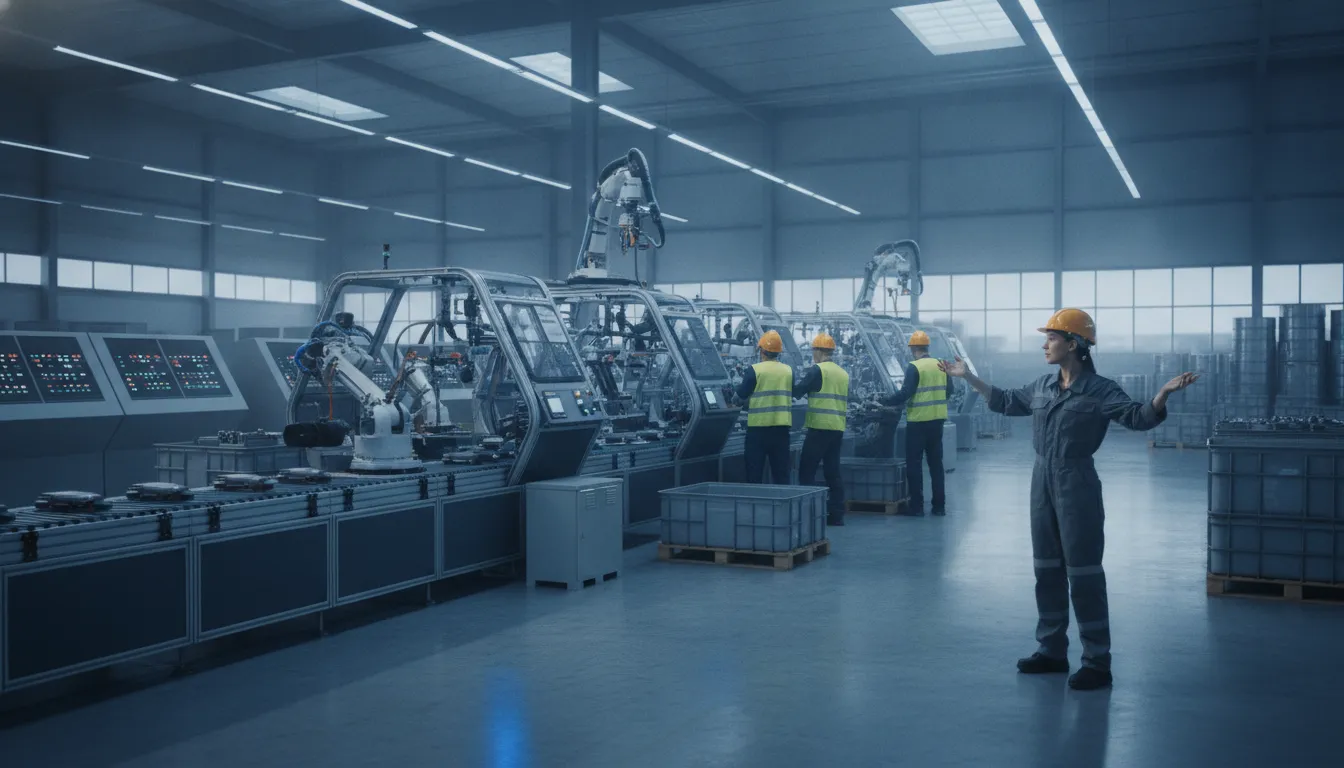
The category covers more than machines performing repeatable actions on a factory floor. Factory-floor automation typically controls physical activities such as assembly, material movement, inspection, or packaging. It may involve sensors, industrial controllers, robotics, and other equipment that executes a defined task with speed and consistency.
Manufacturing process automation addresses the business process around those activities. It can route an engineering change for review, collect required documentation, request supplier input, obtain approvals, and notify the right teams when a dependency is late. The focus is not only on what happens in production, but also on how work, information, and accountability move through the organization.
How Is Process Automation Different From Factory Automation?
Factory automation changes how a physical operation is performed. Process automation changes how the broader operation is coordinated. The two can support each other, but they solve different problems.
- Factory automation: Controls or assists physical production activities, often within a defined workstation, cell, or line.
- Process automation: Coordinates tasks, decisions, approvals, records, and handoffs among operations, engineering, quality, procurement, suppliers, and management.
- Operational orchestration: Connects those participants and systems around a complete business outcome, including the exceptions that interrupt the normal path.
- Human-in-the-loop control: Keeps judgment, review, and approval with the right people when rules alone cannot resolve an issue.
- Traceability: Records handoffs, evidence, decisions, and exceptions so teams can understand what happened and what comes next.
For example, an automated inspection station may identify a quality exception. That is factory-level execution. The process automation layer can route the exception to the appropriate owner and gather supporting evidence. It can prevent an incomplete disposition from advancing and escalate the issue when it remains unresolved.
What Does the Category Include?
Manufacturing process automation can span the lifecycle of operational work. Common examples include product launch readiness, engineering changes, supplier issue resolution, document review, quality and compliance handoffs, and exception management. Each process may involve different systems and people, yet the automation should make dependencies visible and keep work moving when conditions change.
Manufacturing work rarely follows a perfectly straight path. A document may be missing, data may conflict between systems, or a supplier may need to clarify a response. A useful automation process applies rules, identifies the exception, assigns responsibility, and records what happened instead of passing another task from one inbox to another. For a broader view, see automation in manufacturing and manufacturing workflow case studies.
Why Does Manufacturing Process Automation Often Stop Short of End-to-End Execution?
Manufacturing process automation often stops short because individual tools automate tasks without owning the operation between them. ERP records transactions, MES coordinates production activity, PLM manages product information, and AI can extract or classify data. None necessarily resolves the missing document, conflicting record, supplier delay, or human handoff that prevents work from moving forward.
The result is an execution gap. A manufacturer may have connected applications and capable automation while critical work still depends on email, spreadsheets, PDFs, and manual follow-up. The issue is not a lack of technology. It is the absence of a governed layer that coordinates the complete path from trigger to outcome.
Where Do Cross-System Handoffs Break Down?
Consider an engineering change that affects a product nearing launch. PLM may contain the revised design, ERP may hold purchasing and inventory information, and MES may manage shop-floor implications. A workflow may route the change for approval. Yet execution can stall when the supporting specification is missing, a revision conflicts with another system, or a supplier must confirm a new requirement.
These conditions are normal operational exceptions, not rare edge cases. Someone must identify the discrepancy, determine which source is authoritative, request the missing document, notify the right owner, and confirm that downstream systems reflect the approved change. If that coordination happens outside the automated process, visibility and accountability weaken at exactly the point where risk increases.
Why Are Isolated Automations Not Enough?
Each automation is usually optimized for a narrow responsibility. An ERP workflow may approve a purchase request. An AI service may read a supplier document. An integration service may move a status between applications. Those capabilities are useful, but they do not by themselves define what happens when the status is incomplete, the data disagrees, or a person must make a judgment.
End-to-end execution requires a process owner across those boundaries. The process should establish the trigger, required evidence, accountable owners, approval rules, escalation path, and completion criteria. It should preserve an audit trail showing what changed, who acted, and why an exception was accepted or resolved.
This is the role of operational orchestration. It complements existing ERP, MES, PLM, AI, document, and integration investments by coordinating people, information, and systems around a business outcome. Manufacturers evaluating manufacturing operating management software should ask whether it can keep a product launch, supplier resolution, or engineering change moving when real-world variation appears.
Which Manufacturing Processes Are Strong Candidates for Automation?
Strong candidates have repeatable handoffs, multiple owners, approval gates, or costly exceptions. Product launch readiness, engineering changes, supplier issue resolution, quality and compliance handoffs, document review, and exception management fit well. Automation can coordinate people, documents, AI, APIs, and business systems while preserving human control where judgment is required.
Manufacturers should start with processes where work regularly stalls between departments or systems. The best opportunity is not necessarily the highest-volume task. It is often the process where missing information, unclear ownership, or delayed approval creates disproportionate operational risk.
- Product launch readiness: Coordinate readiness evidence and approvals across engineering, operations, sourcing, quality, and product leadership.
- Engineering change orders: Route revisions, impact reviews, documentation, and release decisions with clear ownership.
- Supplier and quality work: Manage submitted documents, corrective actions, investigations, approvals, and closure.
- Document review and exceptions: Validate information, resolve conflicts, and escalate missing evidence before work advances.
- Maintenance and corrective actions: Route recurring issues, inspections, follow-up tasks, and closure evidence to accountable owners.
- Production change coordination: Connect revised requirements, affected teams, approvals, and release conditions before execution resumes.
Product Launch Readiness
A launch workflow can collect the readiness inputs that teams already maintain, including engineering status, supplier confirmation, quality evidence, required documents, and approval decisions. Engineering, operations, sourcing, quality, regulatory, and product leaders each own defined checkpoints. The workflow can route gaps to the responsible owner, require approval before advancing, and produce a visible readiness status with an auditable record.
Engineering Changes
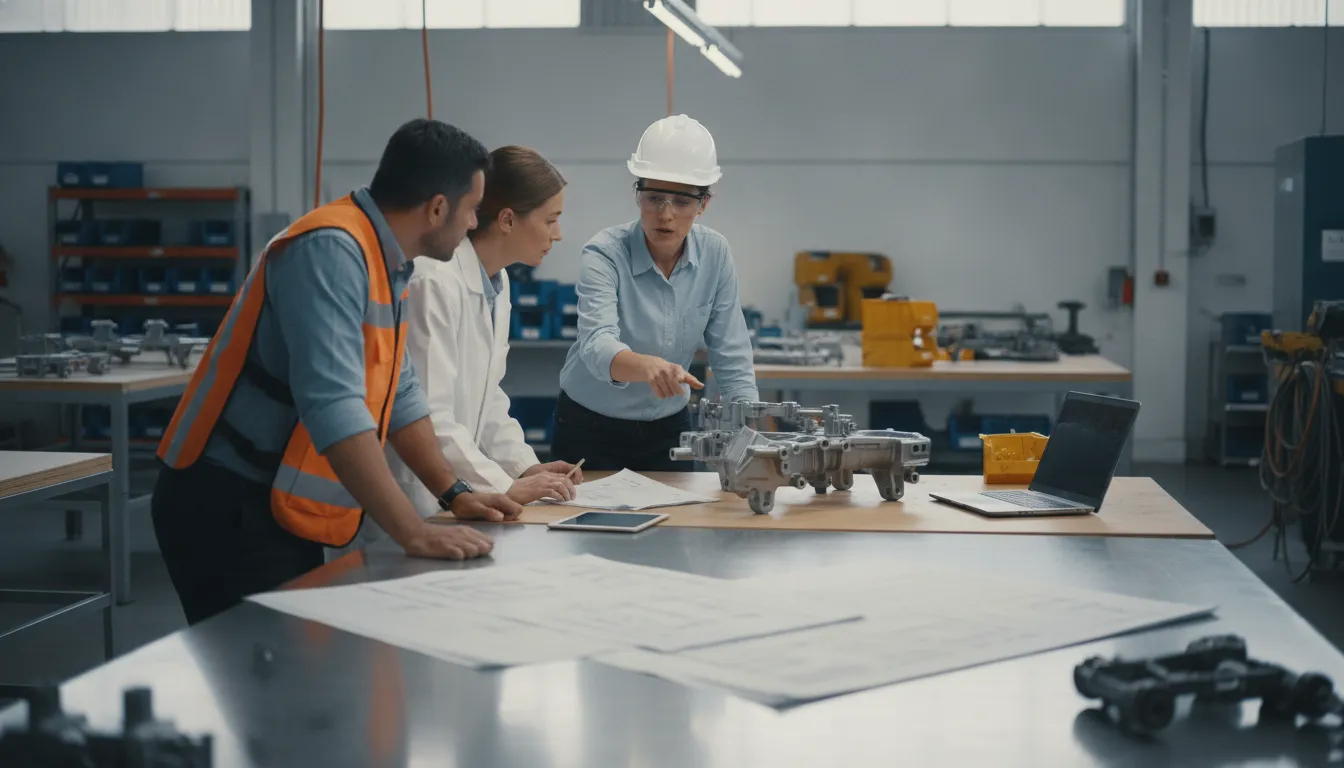
Engineering change processes typically begin with a proposed revision, affected part or product information, rationale, and supporting documentation. Engineering owns the technical assessment, while manufacturing, quality, sourcing, and other affected teams review downstream impact. Approval gates can require confirmation that drawings, work instructions, inventory considerations, and supplier communications have been addressed.
Supplier Workflows and Quality Handoffs
Supplier onboarding and issue resolution are strong candidates when requests arrive with incomplete information or require several reviews. Inputs may include supplier details, submitted documents, an issue description, inspection findings, and corrective-action evidence. Sourcing or supplier quality owns the case, with quality, engineering, and compliance reviewers entering at the appropriate gates.
Quality and compliance handoffs benefit from the same structure. A quality event can move from detection to triage, investigation, evidence review, approval, and closure without relying on email follow-up alone. For a practical view of process automation in plant operations, focus on where plant work crosses functional boundaries.
Document Review and Exception Management
Document-heavy work is a useful starting point when reviewers spend time locating, classifying, and validating information. Inputs can include specifications, certificates, change requests, inspection records, or supplier submissions. Intelligent document processing can help extract relevant information, while a designated owner validates uncertain or missing data. Approval gates then determine whether the document is accepted, returned for correction, or routed to a specialist.
Exception management should be designed alongside the normal path. When data conflicts, a document is missing, or a deadline is at risk. The workflow should assign the exception, capture the reason, set escalation rules, and record the resolution. The output is a governed decision trail that keeps the broader manufacturing process moving.
How Do Manufacturers Build a Governed Automation Architecture?
Manufacturers build a governed automation architecture by defining how people, AI, documents, APIs, business systems, rules, approvals, and exceptions work together. The architecture gives each process a clear owner, state, decision path, and audit trail. It coordinates existing investments rather than asking one system to replace the ERP, integration, or AI capabilities already in use.
A practical architecture starts with the operation, not a product catalog. For a product launch, the process may collect engineering inputs, check required documents, route approvals, request missing information, notify responsible teams, and record the final release decision. Each step should have an explicit trigger, responsible party, required evidence, and defined next action.
Separate System Responsibilities From Process Responsibility
ERP systems remain valuable for transactions and master data. AI can extract information from documents or identify items that need attention. APIs and an integration platform as a service can move data between applications. Those capabilities do not necessarily define what should happen when information is incomplete, conflicting, or delayed.
The orchestration layer owns that end-to-end process state. It can determine whether a document is complete, whether a rule requires human review, which approval comes next, and when an exception should escalate. This separation keeps each system focused while giving operations leaders a consistent view of work across engineering, supply chain, quality, production, and commercial teams.
Make Governance Part of the Workflow Design
Governance is more than a report generated after work is finished. It is built into the process through role-based approvals, controlled rules, required evidence, versioned definitions, and traceable status changes. Audit trails should show what happened, when it happened, which inputs were used, and who approved or overrode an outcome.
Exception paths deserve the same design attention as the normal path. A supplier issue, missing certificate, engineering change, or conflicting production value should create a visible work item with an owner and escalation rule. The process should pause safely, preserve context, and resume from the correct state rather than sending teams back to email and spreadsheets.
Use Dynamic Sub-Workflows for Legitimate Variation
Manufacturing processes rarely follow one identical route across every product, site, supplier, or risk level. Dynamic sub-workflows can support runtime variation when required checks or approvals depend on the data available at that stage. A process may invoke different review paths based on product characteristics, document status, or an exception type.
FlowWright fits this architecture as a complementary operational orchestration layer. Its embeddable .NET engine can be relevant for teams that need workflow capabilities within .NET applications, while dynamic sub-workflows support data-driven process variation. Teams can review FlowWright's enterprise workflow capabilities and embeddable workflow architecture when mapping governance, approvals, and audit requirements to an implementation.
How Can Automation Reduce Risk and Speed Product Launches?
Automation can accelerate a product launch when it coordinates the work around the launch, not just one task inside it. Visibility into readiness, clear ownership, timely escalation, traceable approvals, and structured exception handling help teams resolve issues before they become launch blockers.
For manufacturers, the goal is not to replace the ERP, engineering systems, quality processes, or people who make launch decisions. It is to connect their work into a governed operation that keeps moving when information is incomplete or conditions change.
How Does Visibility Expose Launch Risk Earlier?
A launch workflow should make readiness visible across engineering, operations, quality, supply chain, documentation, and commercial stakeholders. Instead of asking for updates across email threads and spreadsheets, leaders can see which activities are complete, which are waiting, and which depend on another team or system.
That visibility changes the timing of risk management. A missing drawing, unresolved supplier question, or pending approval becomes an identifiable exception with context rather than a surprise discovered during a final review. Teams can focus attention where it matters instead of reconstructing launch status manually.
Why Do Ownership and Escalation Improve Speed?
Every handoff should have a named owner, a defined input, and a clear expected output. When an engineering change reaches manufacturing, the workflow can route the change for the required review, identify affected work, and assign follow-up to the responsible team. If the review stalls or a required document is missing, an escalation path prevents the item from disappearing in an inbox.
This does not mean every activity needs the same approval chain. Launch work often changes at runtime. A supplier issue may require additional review, while a routine revision may follow a shorter path. Conditional routing lets the process reflect the situation without forcing teams to manage every variation manually.
How Does Traceability Protect the Launch?
Traceability connects the request, supporting documents, approvals, changes, exceptions, and final disposition. That record gives teams a reliable account of what happened and why. It also makes the next handoff more complete, because the receiving team does not have to search through disconnected systems to understand the decision or its conditions.
Consider a launch-readiness review in which a late engineering change affects a supplier document and a quality check. A coordinated workflow can route the change to relevant owners, hold dependent work until required evidence is available, and record the approvals that release the next stage. If the change conflicts with existing information, it can send the case to an exception path instead of allowing incomplete work to proceed silently.
For manufacturers, the practical value of process automation is controlled momentum: routine work follows a known path, people see what needs attention, and exceptions receive deliberate handling. That combination can shorten avoidable waiting while reducing the chance that a launch advances without the right review or evidence.
What Should Manufacturers Measure After Automating a Process?
Manufacturers should measure whether work moves faster, more completely, and with fewer unmanaged exceptions after automation. Start with a baseline for cycle time, handoff latency, exception aging, rework, first-pass completeness, approval time, and launch-readiness status. Assign each metric an owner, review trends on a defined cadence, and adjust the workflow when evidence shows a control is failing.
- Movement: Cycle time, wait time between handoffs, approval latency, and exception age show where work slows.
- Completeness: First-pass completeness and rework show whether required information is available before a process advances.
- Control: Escalation response, unresolved exceptions, and traceable approvals show whether governance works in practice.
- Outcome: Launch-readiness status and successful completion show whether faster activity is producing a better business result.
The baseline should reflect the process as it operated before automation, not an idealized target. For a product launch, record how long a request takes from intake to readiness. How long work waits between engineering, quality, procurement, and operations, and where missing information causes a pause. If the process varies by product, plant, or risk level, segment the baseline rather than blending unlike work into one average.
Measure Movement Through the Process
Cycle time shows elapsed time from a defined start to a defined completion. Handoff latency shows how long work waits before the next owner accepts it. Exception aging shows whether nonstandard cases receive timely attention. Together, these measures distinguish active processing from avoidable waiting.
Measure Quality at the First Pass
First-pass completeness measures how often work advances with the required inputs and evidence. Rework measures how often a request returns because information or approval was incomplete. A faster process that creates more rework may be shifting effort downstream rather than improving execution.
Give Measurement a Governance Rhythm
Every metric needs a named process owner and a clear definition. Review operational signals often enough to catch active delays, then hold a broader weekly or monthly governance review for trends, recurring exceptions, and policy changes. Measurement is most useful when it leads to controlled improvement, not another reporting exercise.
Frequently Asked Questions
What Is Manufacturing Process Automation?
Manufacturing process automation uses software to coordinate operational work, information, approvals, and systems across the manufacturing lifecycle. It complements factory-floor automation by managing business processes around engineering changes, supplier issues, product launches, document review, quality handoffs, and exceptions.
What Is the Difference Between Factory Automation and Process Automation?
Factory automation controls physical activities such as machine movement, sensing, and production equipment. Process automation coordinates the people, documents, rules, approvals, and business systems that determine what happens before, during, and after those physical activities. Manufacturers often need both to keep execution moving.
Which Manufacturing Processes Are Good Candidates for Automation?
Start with processes that cross departments or systems and regularly stall because of missing information or unclear ownership. Product launch readiness, engineering change orders, supplier issue resolution, document review, quality and compliance handoffs, and exception management are practical candidates because their inputs, approvals, escalations, and outputs can be defined.
How Does Automation Improve Manufacturing Efficiency?
Automation reduces manual coordination by assigning ownership, routing work, checking required information, recording approvals, and escalating exceptions. This gives teams visibility into handoff delays and unresolved work instead of relying on email, spreadsheets, PDFs, or follow-up meetings to discover what is holding an operation back.
What Technologies Are Used in Manufacturing Process Automation?
A governed automation architecture can coordinate ERP and other business systems with APIs, workflow rules, document processing, AI, and human approvals. The goal is not to replace every existing tool. It is to connect the work between them, including exception paths that require judgment, additional evidence, or a different sequence of steps.
Ready to Connect Manufacturing Workflows?
When product launches, engineering changes, supplier issues, and exceptions cross multiple teams and systems, a clearer orchestration approach can help everyone understand what happens next. FlowWright can help you evaluate where workflow automation and operational coordination fit your current environment.
Get Demo to talk with the FlowWright team about your manufacturing process automation goals and next steps.