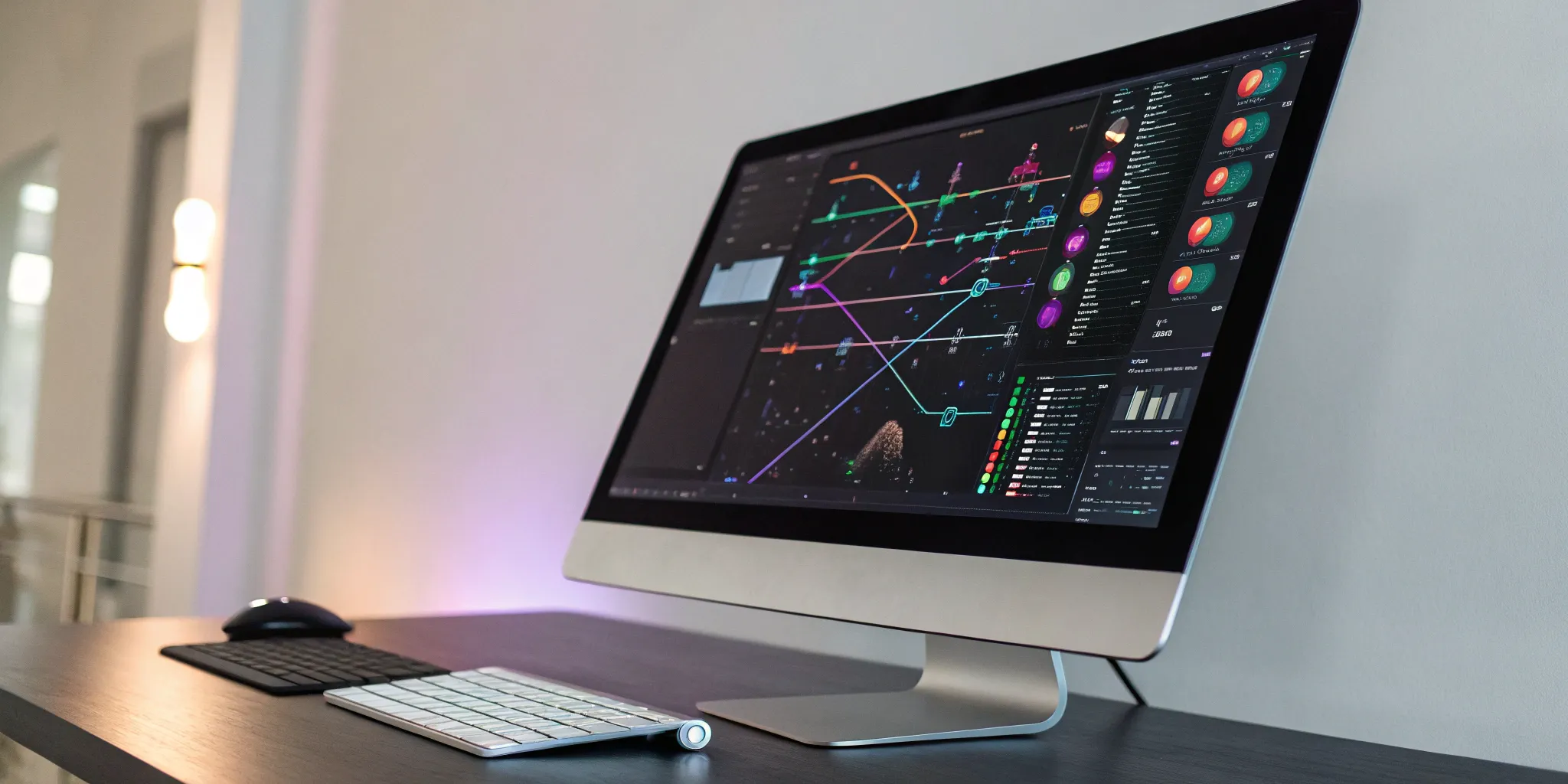
Getting teams from different departments to agree on a process can be a serious challenge. Business users know what needs to happen, while IT understands the technical requirements, but they often speak different languages. This disconnect can lead to workflows that are inefficient or don't meet real-world needs. A visual workflow designer acts as a common language that everyone can understand. By providing a shared, interactive blueprint, it allows business analysts, developers, and department heads to collaborate in one place. This guide explores how visual workflow designer software bridges the gap between teams, ensuring the processes you build are effective, aligned with business goals, and supported by everyone involved.
Key Takeaways
- Start with a Visual Map to Find Inefficiencies: Turning complex processes into clear diagrams is the best way to see where work gets stuck. A visual map helps your team spot bottlenecks, eliminate redundant steps, and agree on a single, efficient way to get things done.
- Decide if You Need to Draw or Do: Some tools are great for diagramming and planning, while others are built to execute those plans automatically. Understand whether you need a simple flowchart tool for collaboration or a powerful automation platform that connects to your systems and runs the work for you.
- Choose a Platform That Can Grow with You: Your needs will change as your business expands. Select a tool that not only solves today's problems but also offers the scalability, security, and deep integration capabilities required to support more complex, enterprise-level processes in the future.
What is a Visual Workflow Designer?
Think of a visual workflow designer as a digital blueprint for your business processes. It’s a software tool that allows you to create a clear, graphical map of how work moves through your organization. Instead of relying on dense text documents or confusing spreadsheets, you can build an easy-to-understand diagram that shows every step, decision point, and handover in a process. This visual approach makes it simple for anyone in the company to see exactly how things get done, from a simple vacation request to a complex client onboarding sequence.
These tools use drag-and-drop shapes and connectors to represent tasks, approvals, and the flow of information. By mapping everything out, you can quickly spot bottlenecks, redundant steps, and areas ripe for improvement. A well-designed graphical process clarifies roles and responsibilities, ensuring everyone knows what they need to do and when. This clarity is crucial for standardizing your operations, which helps reduce errors and makes it much easier to train new team members. It transforms abstract processes into tangible, manageable workflows that your entire team can understand and follow. Ultimately, it’s about creating a single source of truth for how your business runs, paving the way for greater efficiency and smarter automation.
Key Features to Look For
When you’re evaluating visual workflow designers, it’s easy to get lost in a long list of features. But not all capabilities are created equal. The right tool should feel like a natural extension of your team, making complex processes simple and clear. To find the best fit, focus on a few core functions that directly impact how your team will build, manage, and scale your workflows. These are the non-negotiables that separate a basic diagramming tool from a true process automation powerhouse that can drive real transformation in your business.
An Easy Drag-and-Drop Interface
Your workflow designer should be intuitive for everyone, not just developers. A clean, visual, drag-and-drop interface is essential because it allows team members to map out processes without needing to write a single line of code. This visual approach makes it easier to spot inefficiencies, collaborate on improvements, and get new workflows up and running faster. When the tool is easy to use, it encourages wider adoption across your organization. This empowers more people to contribute to process improvement without facing a steep learning curve or requiring extensive training, turning workflow design into a shared responsibility.
Seamless Integration Options
No business tool works in a vacuum. Your workflow designer must be able to communicate with the other software you rely on every day, from your CRM and ERP to your HR and accounting systems. Look for a platform with strong integration capabilities, like pre-built connectors and a robust API. The goal is to create a unified ecosystem where data flows automatically between applications. This ability to seamlessly connect your existing systems eliminates manual data entry, reduces errors, and ensures your automated processes have access to the information they need to run smoothly and efficiently.
Built-in Collaboration Tools
Designing and refining workflows is a team sport. The best visual designers include features that make it easy for multiple people to work together. This means more than just sharing a file; it means real-time collaboration where team members can co-edit diagrams, leave comments directly on specific steps, and track version history. These tools create a central hub for feedback and discussion, ensuring everyone is aligned on the process from start to finish. When your team can collaborate effectively within the platform, you can build and launch better, more thoughtful workflows in less time.
Powerful Automation and Scalability
A great visual designer does more than just create diagrams of your processes—it brings them to life. The real value comes from a tool that can actually execute the workflows you design. Look for a powerful automation platform that can handle tasks like sending emails, updating databases, and routing documents for approval. Just as important is scalability. Your business will grow and your processes will become more complex. Choose a tool that can grow with you, handling an increasing volume of workflows and users without a drop in performance or requiring a complete overhaul.
Robust Security and Compliance
For any business, but especially for enterprises and government organizations, security is paramount. When your workflows handle sensitive customer data or internal information, you need a platform with enterprise-grade security features. This includes role-based access controls, detailed audit logs, and data encryption to protect information both at rest and in transit. A secure platform gives you the confidence to automate critical business processes while ensuring you remain compliant with industry regulations and internal governance policies. Security shouldn't be an afterthought; it needs to be a core part of the platform's architecture.
7 Best Visual Workflow Designer Tools
Finding the right visual workflow designer depends entirely on what you need to accomplish. Are you looking to connect a few of your favorite apps to automate simple tasks? Or do you need a powerful engine to run complex, mission-critical processes across your entire enterprise? The tools available today span this entire spectrum, from simple integration platforms to comprehensive enterprise workflow automation solutions. Some are excellent for brainstorming and diagramming, helping your team visualize a process before you build it. Others are built for pure automation, acting as the connective tissue between all your software and systems.
This list covers the best options across the board, from simple integration platforms to comprehensive enterprise solutions. As you go through them, think about the scale of your needs, who will be using the tool (business users, developers, or both), and how deeply it needs to connect with your existing technology stack. Each tool has its own strengths, and the best choice is the one that aligns perfectly with your team’s goals and technical requirements. We’ll look at what makes each one unique so you can get a clear picture of where it fits.
FlowWright - Enterprise workflow automation platform
FlowWright is more of an industrial-strength engine than just a diagramming tool. It’s built from the ground up for enterprise-level automation, designed to handle complex, large-scale processes that are central to a business's operations. What makes it stand out is its dual approach: it offers a low-code environment that empowers business users to build and manage their own workflows, while also providing deep customization and power for developers. This flexibility makes it highly adaptable. The platform also incorporates an AI Copilot to help you build processes and forms even faster, turning it into a true partner in digital transformation. It’s the right choice for organizations that need a robust, scalable, and secure foundation for their automation strategy.
Microsoft Power Automate - Cloud-based automation
If your organization runs on the Microsoft ecosystem, Power Automate is a natural fit. This cloud-based service excels at creating automated workflows between your favorite Microsoft apps and services—think SharePoint, Outlook, Teams, and the entire Dynamics 356 suite. You can use it to set up simple automations, like saving email attachments to OneDrive or creating a task in Planner when you get an important email. Its strength lies in this deep, native integration, which allows for seamless automation within the environment your team already uses every day. While it can connect to non-Microsoft apps, it delivers the most value for businesses heavily invested in Microsoft’s software stack.
Nintex - Process management and automation
Nintex offers a comprehensive platform that covers the full lifecycle of process management and automation. It’s designed to be accessible, with a user-friendly interface that works well for both business analysts and IT professionals. With Nintex, you can visually design, automate, and optimize your business processes all in one place. The platform is well-regarded for its ability to handle everything from simple departmental workflows to more complex, cross-functional processes. It’s a strong contender for organizations looking for a single, unified platform to manage their process improvement initiatives without requiring extensive coding knowledge from every user.
Zapier - App integration and automation
Zapier is the king of connectivity for web applications. Its primary strength is its massive library of pre-built integrations, allowing you to connect thousands of different apps with just a few clicks. The platform operates on a simple trigger-and-action model called "Zaps." For example, "When I get a new entry in a Typeform (trigger), create a new row in a Google Sheet (action)." It’s incredibly intuitive and requires no code, making it perfect for automating repetitive, everyday tasks between the cloud-based tools you already use. Zapier is ideal for individuals, small teams, and businesses that need to quickly and easily link their web services together.
Monday.com - Work management platform
While many know Monday.com as a project management tool, it also includes powerful visual workflow capabilities. It’s best described as a "Work OS," a central platform where teams can build custom applications and workflows to manage their projects, tasks, and processes. Its interface is built around highly customizable visual boards, which you can use to track anything from a sales pipeline to a content calendar. The automation features are designed to reduce manual work within these boards, such as automatically assigning tasks, sending notifications on status changes, or moving items between groups. It’s a great choice for teams looking for a collaborative hub to manage their work and automate processes within that same environment.
Lucidchart - Diagramming and visual collaboration
Lucidchart is a top-tier tool for the "visual" part of visual workflow design. It’s primarily a diagramming and data visualization platform that helps teams map out, analyze, and understand their processes. While it doesn't execute the automations itself, it’s an invaluable tool for the planning phase. You can create detailed flowcharts, process maps, and organizational charts with incredible clarity. One of its standout features is the ability to link diagrams to live data, creating dynamic dashboards that reflect your processes in real-time. Lucidchart is perfect for teams that need to collaboratively design and document complex workflows before handing them off for implementation in an automation platform.
Miro - Visual collaboration and workflow design
Miro is an online collaborative whiteboard that excels at the brainstorming and initial design stages of workflow creation. Think of it as a limitless digital canvas where your team can gather to map out ideas, create user story maps, and design process flows in real-time, no matter where they are. Its strength is its freeform, flexible nature, which encourages creativity and collaboration. Teams can use sticky notes, shapes, arrows, and templates to visualize how a process should work, identify potential bottlenecks, and get everyone on the same page. Miro is the ideal starting point for defining a workflow before you move into a more structured tool for building and automation.
How Do These Tools Stack Up?
Choosing the right visual workflow designer depends on what you need it to do. Are you looking to simply map out a process, or do you need to build a process that runs on its own? The tools we've discussed fall into two main camps: those that help you visualize work and those that help you automate it. Understanding this distinction is the key to finding the right fit for your team. Let's break down the key differences across a few important areas.
Ease of Use and Learning Curve
Most visual workflow tools are designed to be user-friendly. Tools focused on diagramming, like Lucidchart and Miro, make it incredibly simple to start mapping out a process. You can use a drag-and-drop interface with pre-made shapes and templates to quickly create a visual representation of how work flows through your team. This is perfect for brainstorming sessions, creating training documents, or just getting everyone on the same page about a process. They have a low learning curve, meaning almost anyone can jump in and start creating a flowchart in minutes without extensive training.
Automation Power and Flexibility
This is where the distinction becomes critical. While drawing a workflow is helpful, the real transformation happens when that workflow can execute tasks automatically. For a process that actually does things—like sending emails, updating databases, or routing documents for approval—you need a true business process management (BPM) and automation platform. These systems go beyond static diagrams to bring your workflows to life. They are built to handle repetitive tasks, enforce business rules, and run complex processes without manual intervention, giving your team more time to focus on strategic work.
Integration and Customization Potential
A workflow doesn't exist in a bubble; it needs to connect with the other applications your business relies on. Many visual collaboration tools offer integrations with popular apps like Slack, Jira, and Asana. However, enterprise-level automation requires deeper, more robust connections. A powerful workflow platform should offer extensive integration capabilities that allow it to communicate with everything from your CRM and ERP systems to custom-built internal applications. This ensures your processes can grow with your company and adapt to more complex operational needs as they arise.
Why Use a Visual Workflow Designer?
If you’ve ever tried to explain a complex business process using only words, you know how quickly things can get confusing. A visual workflow designer cuts through the noise by turning abstract steps into a clear, interactive map. It’s a tool that lets you drag and drop tasks, decisions, and actions to build a complete picture of how work moves through your organization. This isn't just about creating diagrams; it's about building a shared understanding that bridges the gap between business goals and technical execution.
When everyone can see the process, you can spot inefficiencies, identify automation opportunities, and align your entire team around a single source of truth. Instead of relying on outdated documents or tribal knowledge, you get a dynamic, easy-to-understand view of your operations. This visual approach makes it much easier to refine, automate, and manage your workflows. A platform with a robust set of workflow automation features gives you the power to not only design these processes but also bring them to life, driving real improvements in how your business runs. It’s the first step toward making your processes more efficient, consistent, and scalable.
See Your Entire Process Clearly
One of the biggest challenges in process management is that no single person has a complete view of how everything works from start to finish. A visual workflow designer solves this by creating a comprehensive map of your entire process. It helps you draw a clear picture of how work gets done, showing all the steps, information flows, and key decisions along the way. When you can visualize a workflow in its entirety, you can finally see where the bottlenecks are, which steps are redundant, and where handoffs are breaking down. This clarity is essential for making smart, targeted improvements instead of guessing where the problems lie.
Improve Team Collaboration
Getting teams from different departments to agree on a process can be tough. A visual workflow acts as a common language that everyone can understand, from marketing and sales to IT and finance. It provides a central place where team members can collaborate, offer feedback, and refine the process together. This shared visual context ensures everyone is on the same page, reducing misunderstandings and speeding up decision-making. Instead of working in silos, your teams can build and agree upon processes in a collaborative environment, ensuring the final workflow is one that truly works for everyone involved.
Work More Efficiently with Fewer Errors
Confusion is the enemy of efficiency. When process steps are unclear, work slows down and mistakes happen. Visual workflow software helps solve these common business problems by making every part of the process explicit and easy to follow. With a clear map, each person knows exactly what they need to do, what information they need, and who to pass the work to next. This level of clarity dramatically reduces the chance of human error and ensures that tasks are completed correctly the first time. As a result, your team can work more efficiently, complete tasks faster, and produce higher-quality outcomes with less rework.
Simplify Compliance and Audits
For any organization dealing with regulations or internal standards, proving compliance is critical. A visual workflow designer is an invaluable tool for this, as it creates clear, accessible documentation of your standard operating procedures. Instead of digging through dense manuals, you can present auditors with a straightforward diagram that shows exactly how your processes adhere to requirements. This visual evidence makes audits smoother and less stressful. It’s also a fantastic resource for training new employees, helping them quickly understand their roles and responsibilities within the larger business process management framework.
Potential Roadblocks (And How to Handle Them)
Adopting any new software comes with its own set of challenges, and a visual workflow designer is no exception. But don't let that discourage you. With a bit of foresight and a solid plan, you can smoothly introduce a new tool and get your team excited about the improvements it will bring. Thinking through these common hurdles ahead of time is the best way to ensure a successful rollout.
Getting Your Team On Board
Change can be tough, and the last thing anyone wants is another tool forced upon them. The key to getting buy-in is to bring your team into the conversation early. Explain why you’re considering a new workflow designer and focus on how it will make their jobs easier—less manual data entry, fewer bottlenecks, and more clarity on projects. Involve key team members in the selection process. When people feel heard and have a hand in the decision, they’re far more likely to become champions for the new system.
Handling Complex Integrations
Your business likely runs on a whole ecosystem of applications, from CRMs to databases. A new workflow tool needs to fit into this puzzle seamlessly. Before you commit, take the time to map out all your existing systems and data sources. Look for a designer with flexible iPaaS solutions and robust APIs that can connect to the tools you already rely on. This initial planning prevents major headaches down the road and ensures your new software enhances your current processes instead of disrupting them. A tool that integrates well is a tool that gets used.
Planning for Training and Support
Even the most intuitive software has a learning curve. A successful launch depends on great training. Don’t just hand over a login and hope for the best. Plan for hands-on workshops, create easy-to-follow guides for common tasks, and make sure everyone knows where to go for help. Ongoing support is just as important as the initial training. When your team feels confident and supported, they’ll be able to take full advantage of all the powerful automation features your new tool has to offer, turning them into proficient users who can drive real efficiency.
Finding the Right Fit for Your Business
Choosing the right visual workflow designer isn't a one-size-fits-all decision. The best tool for a five-person startup will look very different from what a global corporation or a government agency needs. Your company's size, complexity, growth plans, and specific security requirements all play a huge role in finding the perfect match. Let's break down what to look for based on where your business is today and where you want it to go.
For Startups and Small Businesses
When you're just starting, your focus is on getting organized and establishing repeatable processes without a huge upfront investment. You need a tool that's intuitive, easy to implement, and won't break the bank. Look for platforms that help your team see work processes clearly and spot potential bottlenecks early on. Many tools offer free versions or trials, so you can try them out before you commit. This is the perfect time to experiment and find a solution that your team genuinely enjoys using, which will make adoption much smoother.
For Mid-Sized Companies
As your business grows, so does the complexity of your operations. Simple diagramming tools might not cut it anymore. Now, the key considerations are scalability and integration. You need to choose a tool that can grow with your company. It should connect well with the other systems you already rely on, like your CRM or ERP, and be able to handle more work as your business gets bigger. Think about your team's size and how it will expand over the next few years. The right platform should be flexible enough to adapt to these changes without requiring a complete overhaul of your business processes.
For Large Enterprises and Government
Large organizations and government entities operate on a different scale, with non-negotiable requirements for security, compliance, and control. At this level, you need a tool with robust security protocols, deep integration capabilities, and the power to scale across thousands of users and complex workflows. Simple diagramming or project management tools often lack these critical features. Enterprise-level security and clear communication are essential for protecting sensitive data and ensuring smooth operations. Look for a platform built to handle the intricate demands of a large-scale digital transformation.
Evaluating the Value and ROI
When you think about the return on investment (ROI) for a visual workflow designer, it’s easy to get stuck on the initial cost. But the real value goes far beyond that number. A good tool pays for itself by transforming how your team works, saving time, reducing costly errors, and setting you up for future growth. The key is to look at the bigger picture and measure the impact on your overall operations.
To truly understand the value, you need to consider both the immediate wins and the long-term benefits. Think about how much time your team currently spends on manual, repetitive tasks or fixing mistakes that could have been prevented. A visual workflow designer brings clarity to complex processes, making it easier for everyone to see how work gets done and identify opportunities for improvement. This clarity is the first step toward building a more efficient and resilient organization.
Streamlining Operations and Reducing Errors
One of the most significant benefits of a visual workflow designer is the ability to see your entire process laid out clearly. These visual maps help teams spot bottlenecks, redundant steps, and areas of confusion that might otherwise go unnoticed. When everyone understands the flow of work and who is responsible for each step, you naturally reduce mistakes and missed deadlines. By automating routine tasks, you can make processes consistent and free up your team to focus on more strategic, high-impact work. This shift not only improves productivity but also leads to higher-quality outcomes.
Accelerating Training and Onboarding
How long does it take for a new hire to become fully productive? With visual workflow diagrams, you can significantly shorten that timeline. Instead of relying on dense manuals or shadowing colleagues for weeks, new team members can look at a diagram and quickly understand the process. This visual approach makes complex workflows easier to grasp and helps new employees learn their roles faster. Faster onboarding means your new hires can start contributing sooner, which is a direct and measurable return on your investment in the software.
Future-Proofing with Scalability
Your business isn't static, and the tools you use shouldn't be either. When evaluating a workflow designer, think about where your company will be in one, three, or five years. The right tool should be able to grow with you, handling more complex processes and a larger volume of work as your business expands. Investing in a scalable platform ensures that you won't have to switch systems down the line, saving you from the hassle and expense of a future migration. A solution with a powerful, embeddable .NET workflow engine can adapt to your needs, providing lasting value as you continue to innovate.
How to Find Demos, Trials, and Reviews
Reading about features is a great start, but you won’t truly know if a tool is right for your organization until you see it in action. The best way to evaluate a visual workflow designer is to get a firsthand look at its capabilities and hear from others who have already put it to the test. This means scheduling demos, taking advantage of trial periods, and digging into user reviews. This hands-on approach ensures the software doesn’t just look good on paper—it actually solves your specific process challenges.
Schedule a Personalized Demo
A personalized demo is your chance to see how the software handles your unique use cases. Unlike a pre-recorded video, a live demo lets you ask specific questions about integrating with your current tech stack, meeting your security requirements, and scaling for future growth. Come prepared with a list of your most critical process pain points and ask the presenter to show you exactly how their tool would address them. This is the perfect time to understand the platform’s full suite of features and confirm it can handle the complexity your enterprise demands.
Get Hands-On with a Trial
There’s no substitute for direct experience. Trial periods are crucial for testing if a tool can solve your actual problems before you commit. Don’t just poke around the interface—use the trial to build a small but real workflow that mirrors one of your current processes. Invite a few team members to collaborate with you to test its ease of use and collaborative functions. This is your opportunity to see how intuitive the drag-and-drop designer is, how smoothly it connects with your other applications, and whether it truly simplifies your work.
Read Real-World Reviews
While demos and trials show you what a tool can do, reviews tell you how it performs in the real world. Look for feedback on trusted software review sites and read case studies from companies in your industry. Pay close attention to comments about performance, reliability, and the quality of customer support, as these factors are critical for long-term success. Finding user feedback from professionals in similar roles can give you invaluable insight into how the tool works day-to-day and helps manage complex operational demands.
Related Articles
- HTML5 Graphical Workflow Designer
- What Is a Visual Workflow Designer & Why You Need One
- 6 Best Workflow Design Tools Compared for Modern Teams
Frequently Asked Questions
What’s the difference between a diagramming tool and a true workflow automation platform? Think of it like the difference between an architect's blueprint and the actual, functioning building. A diagramming tool, like Lucidchart or Miro, is fantastic for creating the blueprint—mapping out your process, brainstorming ideas, and getting everyone to agree on the plan. A true workflow automation platform, like FlowWright, takes that blueprint and builds the house. It actually executes the tasks, moves data between your systems, sends notifications, and manages approvals, turning your visual map into a living, automated process.
Do you need to be a developer to use a visual workflow designer? Not at all. Most modern workflow designers are built with a low-code or no-code approach, meaning you don't need to be a programmer to build powerful automations. They use intuitive drag-and-drop interfaces that allow business users in departments like HR, marketing, or finance to map out and automate their own processes. While developers can certainly use these platforms to tackle more complex integrations and customizations, the goal is to empower everyone on the team to improve how they work.
How do I know if my company needs a more powerful, enterprise-level tool? You'll start to feel the limitations of simpler tools. A key sign is when your processes need to connect with multiple, complex systems like an ERP or custom databases, not just a few web apps. Another indicator is when you need strict security controls, detailed audit trails for compliance, and the ability to handle a high volume of workflows without slowing down. If your processes are mission-critical to your business operations and require high reliability and scalability, it’s time to look at an enterprise-grade platform.
Can these tools integrate with our company's custom-built applications? Yes, the more robust platforms are designed for this. While simple tools excel at connecting popular cloud apps, enterprise-level workflow designers are built with strong integration capabilities, often including a full API. This allows them to communicate with your homegrown, legacy, or custom software. It ensures you can automate processes end-to-end, creating a seamless flow of information across your entire technology stack, not just the off-the-shelf parts.
Is a visual workflow designer only for technical processes, or can it be used for things like employee onboarding? They are absolutely for both. While a workflow designer can automate complex IT processes like server provisioning, its real power is in its versatility. You can use it to streamline all sorts of business operations. For example, you can design a workflow for employee onboarding that automatically sends welcome emails, assigns training tasks, sets up IT accounts, and schedules check-in meetings. Any multi-step process that involves different people and systems is a perfect candidate for automation.